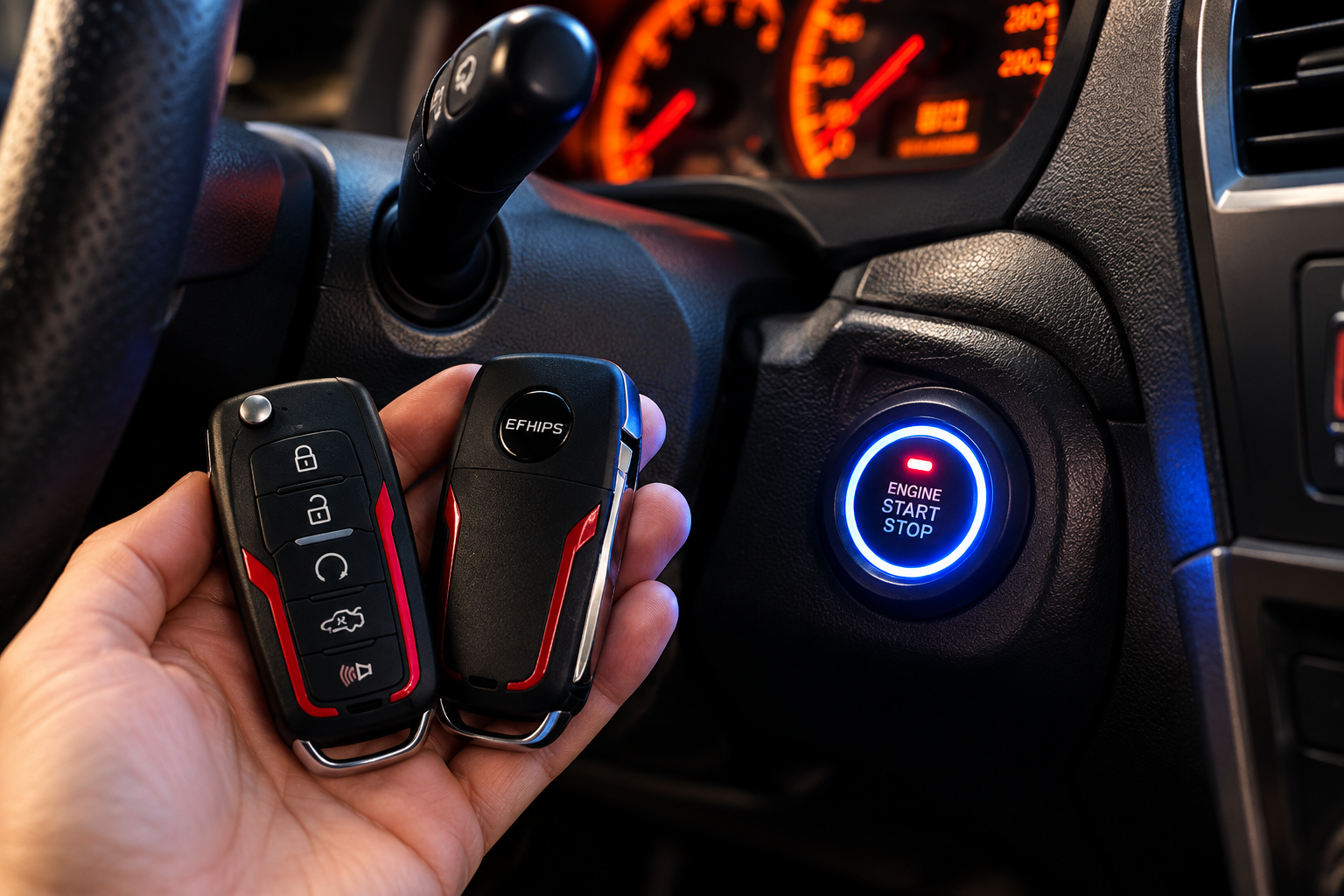
How a PKE Push Button Start System Changes Daily Driving in an Older Car is best understood as a system-level upgrade rather than a dashboard-button modification. The useful question is how the remote, PKE logic, control module, vehicle wiring and start button work together in real daily use.
What PKE Adds to a Push Button Start Upgrade
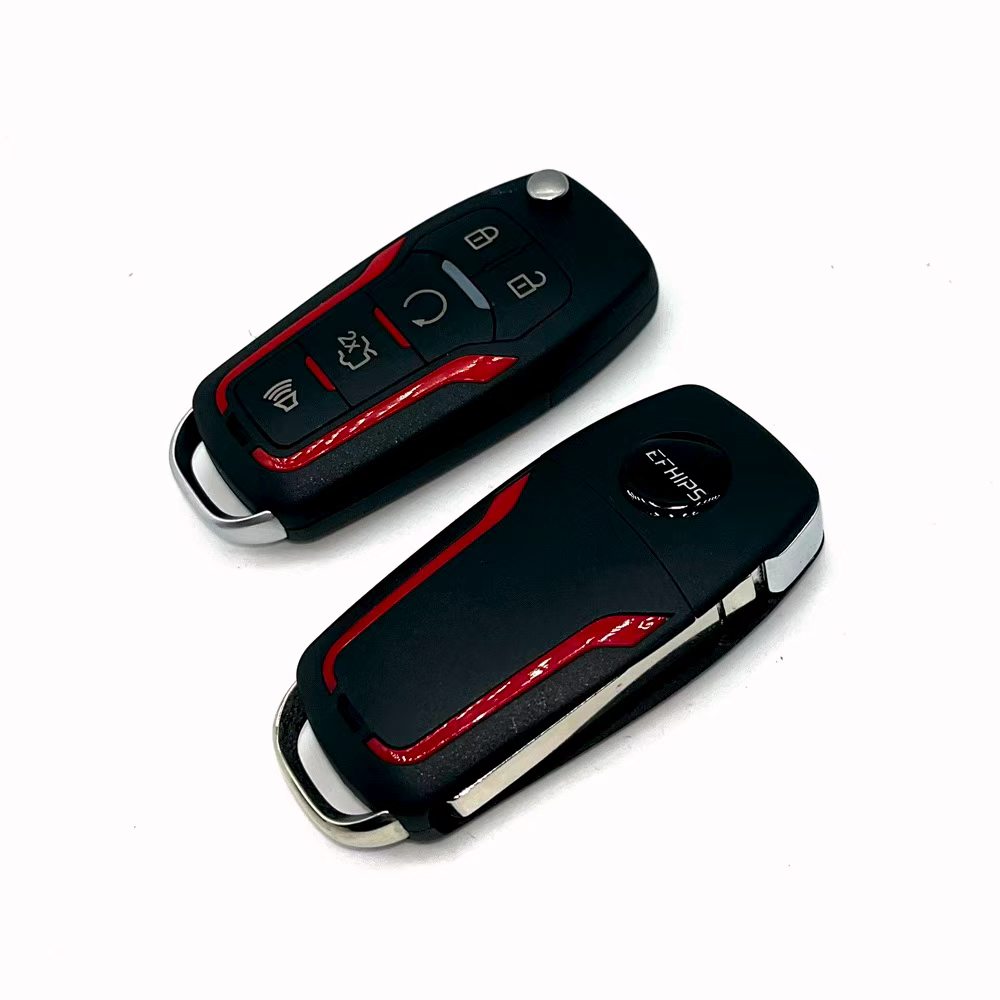
Push button start changes the way the engine is started, but PKE changes the way the driver approaches and leaves the vehicle. In a properly configured system, the remote is carried by the driver and the system detects it within its operating range. That allows the lock and unlock behavior to work without treating the dashboard button as a stand-alone switch.
This distinction matters on older cars. A start button by itself does not create keyless authorization. The control module, antennas, remote fobs and vehicle-side lock connections are what make the broader PKE experience possible.
What the Driver Actually Notices Every Day
The biggest difference is not a dramatic new feature. It is the removal of repeated small actions: taking out the key, inserting it into the ignition and manually operating the same controls every trip. Once the system is installed correctly, the start button becomes the visible part of a larger access-and-start workflow.
Remote start can add another layer of convenience when the vehicle and installation support it. It lets the engine be started from outside the cabin, but the exact operating logic still depends on brake input, ignition circuits, engine detection and any factory immobilizer requirements.
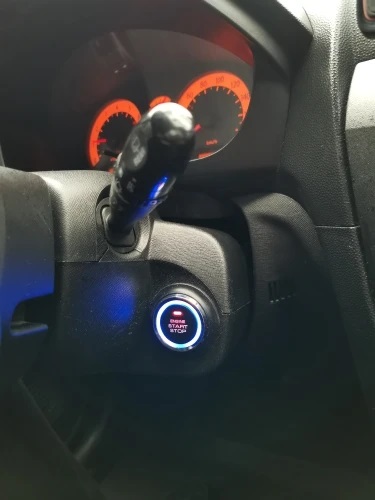
Installation Is More Than Mounting the Button
The button may be the most visible component, but most of the installation work happens behind the dashboard. The installer must identify constant 12V power, ACC, ignition, starter, brake and lock-related circuits as required by the specific installation.
Wire colors should never be treated as proof. Vehicle wiring varies by year, trim, engine and market, and older vehicles may also contain repaired wiring or an earlier alarm or remote-start installation.
Factory Immobilizers Can Change the Project
Many vehicles use a factory immobilizer such as Ford PATS, GM Passlock, Chrysler SKIM or Nissan NATS. An aftermarket push-start controller does not automatically eliminate those systems. Depending on the vehicle, a compatible bypass solution or additional integration may be required.
That is why the same universal kit can be straightforward on one older vehicle and substantially more involved on another. Compatibility should be evaluated at the electrical and immobilizer level rather than by dashboard appearance alone.
A Better Way to Plan the Upgrade
Start by confirming that the vehicle starts reliably in its original configuration. Then document the ignition circuits, factory immobilizer, door-lock logic and any existing aftermarket equipment. Choose the button location only after confirming there is enough clearance behind the panel.
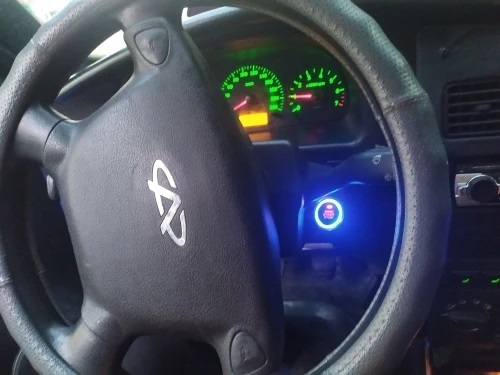
The best installation is one that still looks simple after the dashboard is reassembled. The visible result may be one illuminated button, while the wiring, control module and connections remain protected and securely mounted behind the trim.
Pre-Installation Checklist
- Confirm the vehicle starts normally before modification.
- Identify the factory immobilizer or anti-theft system.
- Verify power, ACC, ignition and starter circuits with a multimeter.
- Check door-lock logic before connecting PKE functions.
- Plan secure mounting for the control module and harnesses.
- Test all functions before reinstalling dashboard trim.
Related Reading
- Factory Immobilizers and Aftermarket Push Button Start
- Troubleshooting ACC, IGN and START Circuits
- How to Install a 12V Push Button Start Switch
- Universal Push Button Switch vs Full Push-Button Start System
Planning a Complete Push Start Upgrade?
Review the vehicle ignition, immobilizer and lock logic before installation.
Browse EFHIPS Systems →Professional installation is recommended when vehicle circuits cannot be confidently identified.