Meta description: Compare a universal 12V push button start switch with a full push-button start system, including wiring, PKE, remote start, immobilizers, and installation scope.
Suggested URL slug: universal-switch-vs-full-push-button-start-system
Universal Push Button Start Switch vs Full Push-Button Start System: What’s the Difference?
If you are working with a 12V push button start switch, the useful questions are electrical: what circuit are you controlling, how is it protected, and what factory systems still need to remain active? This guide focuses on those practical checks rather than treating a universal switch as a plug-and-play promise.
.jpeg)
What a Universal 12V Push Button Switch Does
A universal switch is a physical control and wiring component. In the right circuit it can provide a start command or replace an existing button, while the rest of the vehicle continues to handle ignition, security and engine management.
That makes it attractive for custom dashboards, replacement projects and systems that already have the required control logic.
Its simplicity is also its limitation: it does not magically add proximity unlocking, remote start or transponder authorization.
- Verify the vehicle or equipment is a 12V DC application.
- Identify the exact circuit before connecting the harness.
- Check mounting depth as well as visible panel diameter.
- Keep the installation serviceable for future diagnosis.
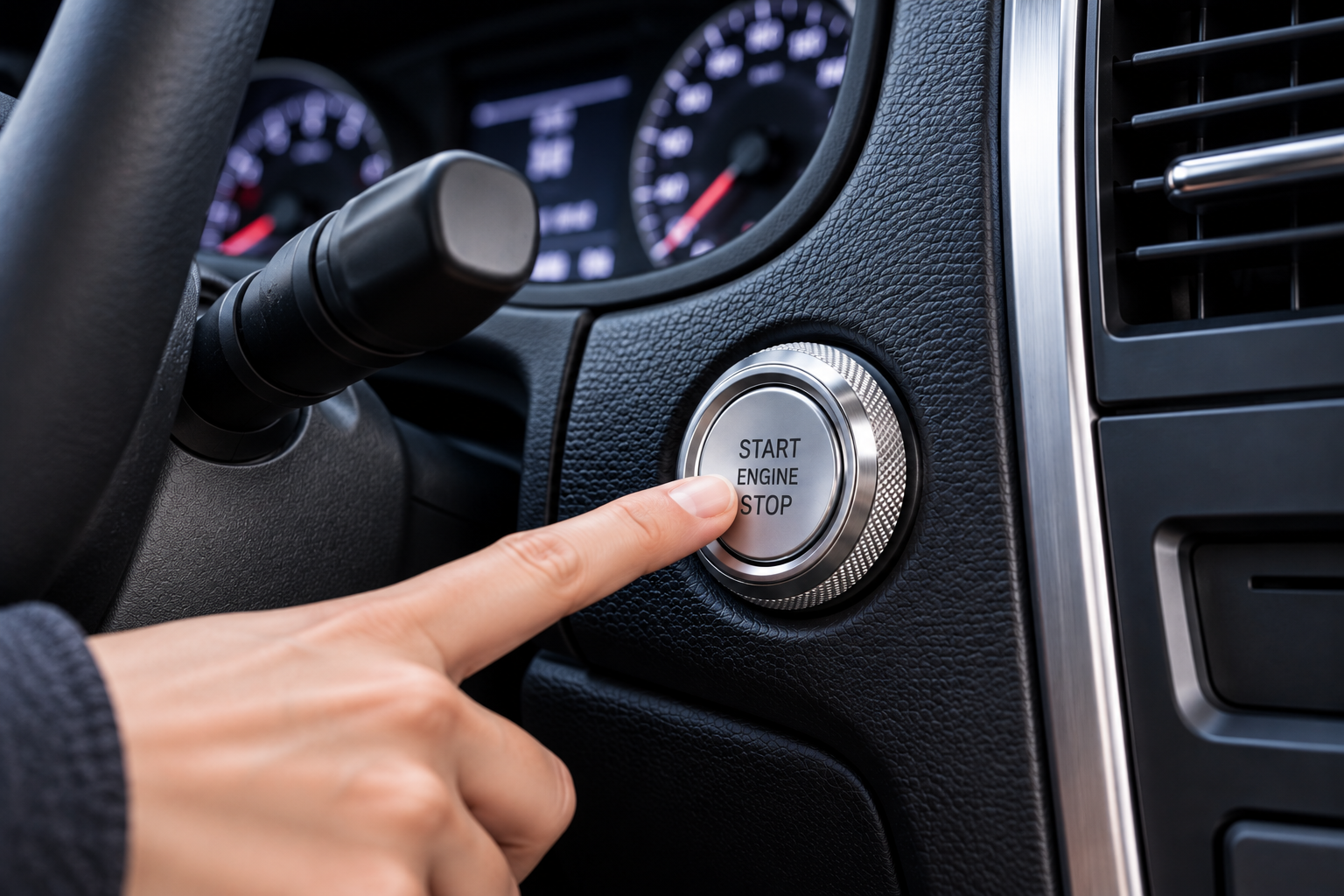
What a Full Push-Button Start System Adds
A complete conversion system may include a control module, antennas, remote transmitters, PKE functions, door-lock outputs, ACC/IGN sequencing and remote-start logic. Some systems also provide outputs intended to coordinate with an external immobilizer interface.
Installation therefore involves more vehicle circuits and more configuration. The installer must understand ignition states, brake input, starter detection and security behavior.
More features are useful only when the project actually needs them.
Safety warning: Disconnect the 12V battery before modifying power wiring. Do not probe or modify SRS/airbag circuits. Keep added wiring fused, preserve neutral-safety or clutch interlocks, and never test-start an engine in an enclosed garage.
PKE, Remote Start and Immobilizer Integration Explained
PKE detects an authorized remote near the vehicle and can control locking or start authorization. Remote start commands the vehicle to start without a person turning the original key. Neither function automatically defeats a factory immobilizer.
PATS, Passlock, SKIM, NATS and similar systems may still require a dedicated interface or retention of factory components.
A standalone button should not be sold or wired as an immobilizer bypass.
A simple verification routine
- Confirm battery and ground condition.
- Identify each circuit with documentation and a meter.
- Check relay and fuse requirements.
- Make temporary protected connections for testing.
- Verify operation before final trim assembly.
.png)
Wiring and Installation Complexity Compared
A simple switch project may involve a trigger circuit, relay, power protection and mounting. A full system can involve constant power, ACC, IGN1, IGN2, starter, brake, lock/unlock, status inputs and more.
Each added connection is another point that must be verified with documentation and a meter. The full system can deliver more functions, but troubleshooting also becomes more involved.
For either type, preserve neutral-safety/clutch interlocks and avoid SRS wiring.
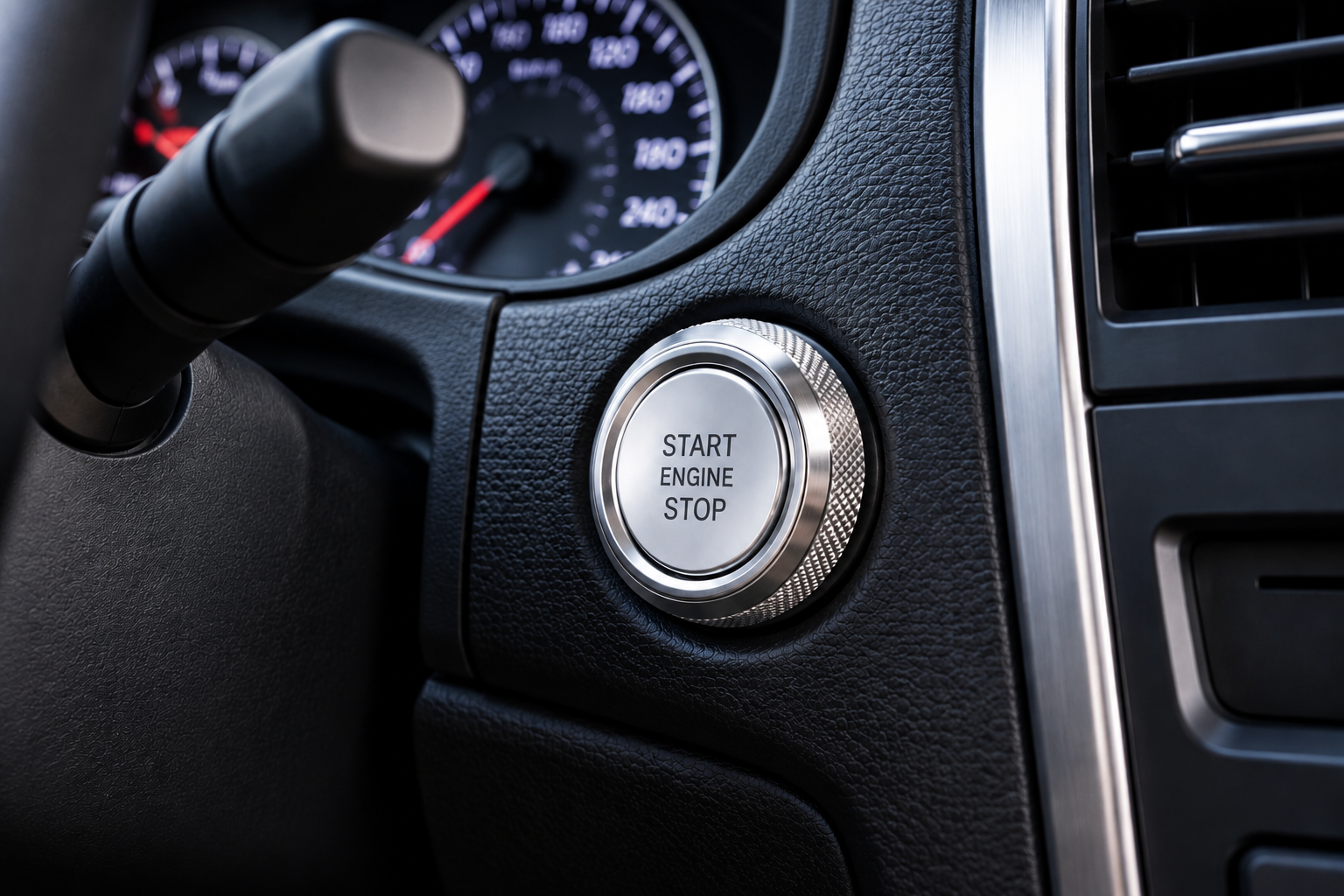
Choosing the Right Type for Your Project
Choose the standalone switch when you already know how the ignition/start logic will be handled and need a durable dashboard control. Choose a broader system only when you actually need electronic ignition sequencing, PKE or remote-start features.
Do not choose based on the words printed on the button. Map your required functions first.
For a replacement or custom 12V control, the EFHIPS metal switch is the simpler component-level option.
Diagnostic Notes for Older 12V Vehicles
Older vehicles often carry evidence of previous electrical work. Before blaming a new component, inspect aftermarket alarms, remote starters, trailer wiring, audio feeds and old splices near the ignition harness. A connection that looks acceptable at rest can develop enough resistance under load to prevent a relay or starter solenoid from operating correctly.
Voltage-drop testing is especially useful. Measure across a connection while the circuit is operating; a large drop points to resistance in that path. This is more informative than a simple continuity beep, because continuity uses very little current and can make a weak connection appear healthy.
If the starter cranks but the engine does not run, separate the crank problem from the run problem. Check the security indicator, scan for immobilizer or engine-management faults when appropriate, and verify that required ignition feeds remain powered during crank. PATS, Passlock, SKIM, NATS and other immobilizer systems can stop engine operation even when the starter button and relay are functioning normally.
Do not defeat a safety or security circuit just to complete a test. The goal is to understand the original system and integrate the new control without creating an unintended start condition.
Practical Checklist Before You Finish
- No exposed copper or unsupported splices.
- Added power feeds are fused correctly.
- Harness cannot contact pedals, steering parts, sharp edges or hot surfaces.
- Starter disengages immediately after the crank command.
- Factory security and safety interlocks still operate as intended.
- No connector or relay becomes abnormally hot after repeated starts.
.jpeg)
Need a Standalone 12V Start Button?
View the EFHIPS chrome metal START ENGINE STOP switch and its pre-wired harness.
View 12V Push Button Switch →Check vehicle wiring, mounting space and immobilizer requirements before installation.