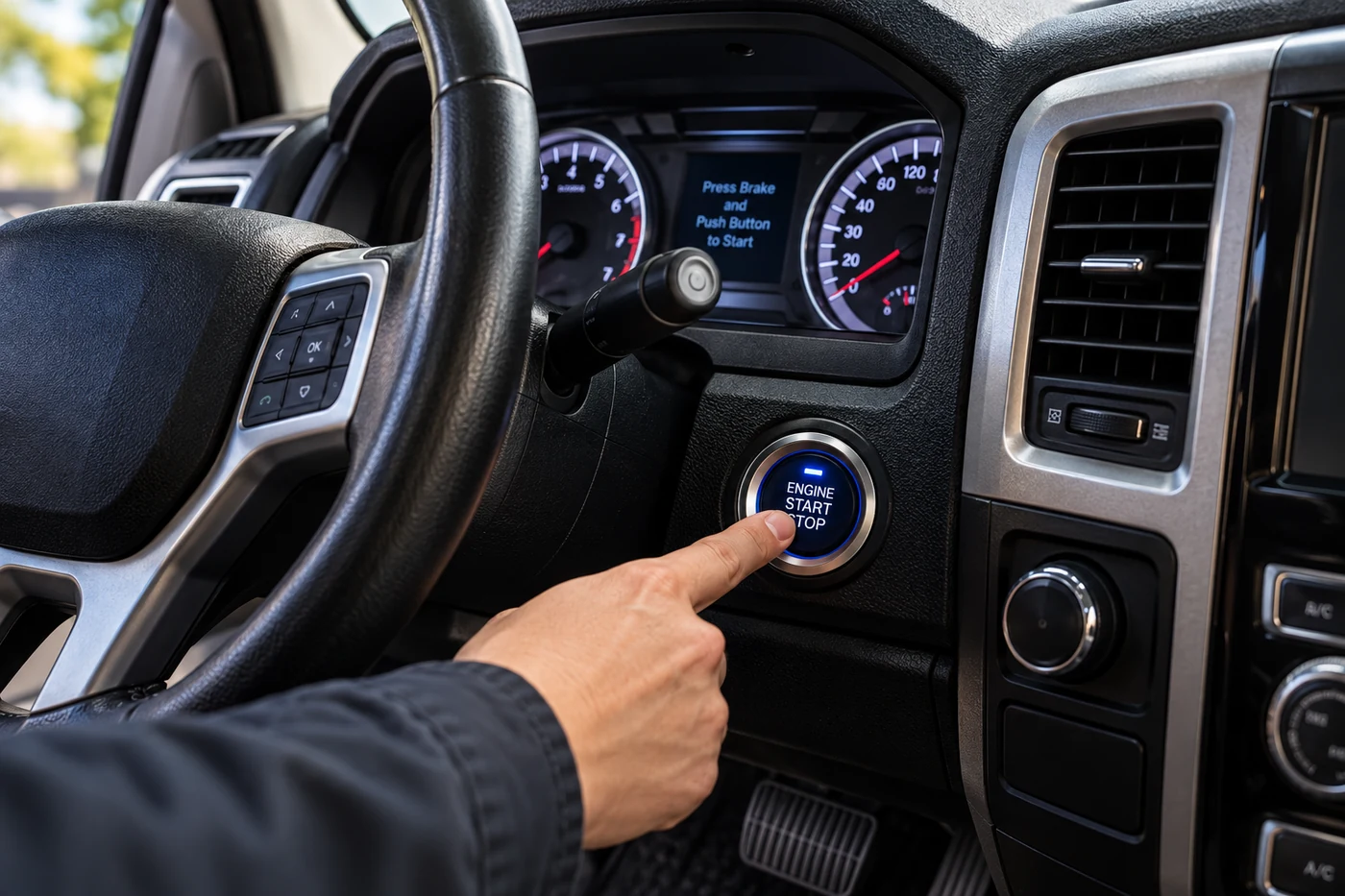
What to check first
1. Confirm the Symptom: “Cranks but Won't Start”
“Won't start” can describe several completely different problems. For this article, cranks but won't start means the starter motor turns the engine at normal speed, but combustion never begins—or the engine catches briefly and immediately stalls. That is different from a no-crank condition where the starter never turns.
This distinction matters because an aftermarket push button start system can successfully energize the starter while another required circuit is missing. The PCM, ignition coils, injectors, fuel pump, factory immobilizer or an ignition feed can still prevent the engine from running.
2. Know What the EFHIPS 9007 System Is Controlling
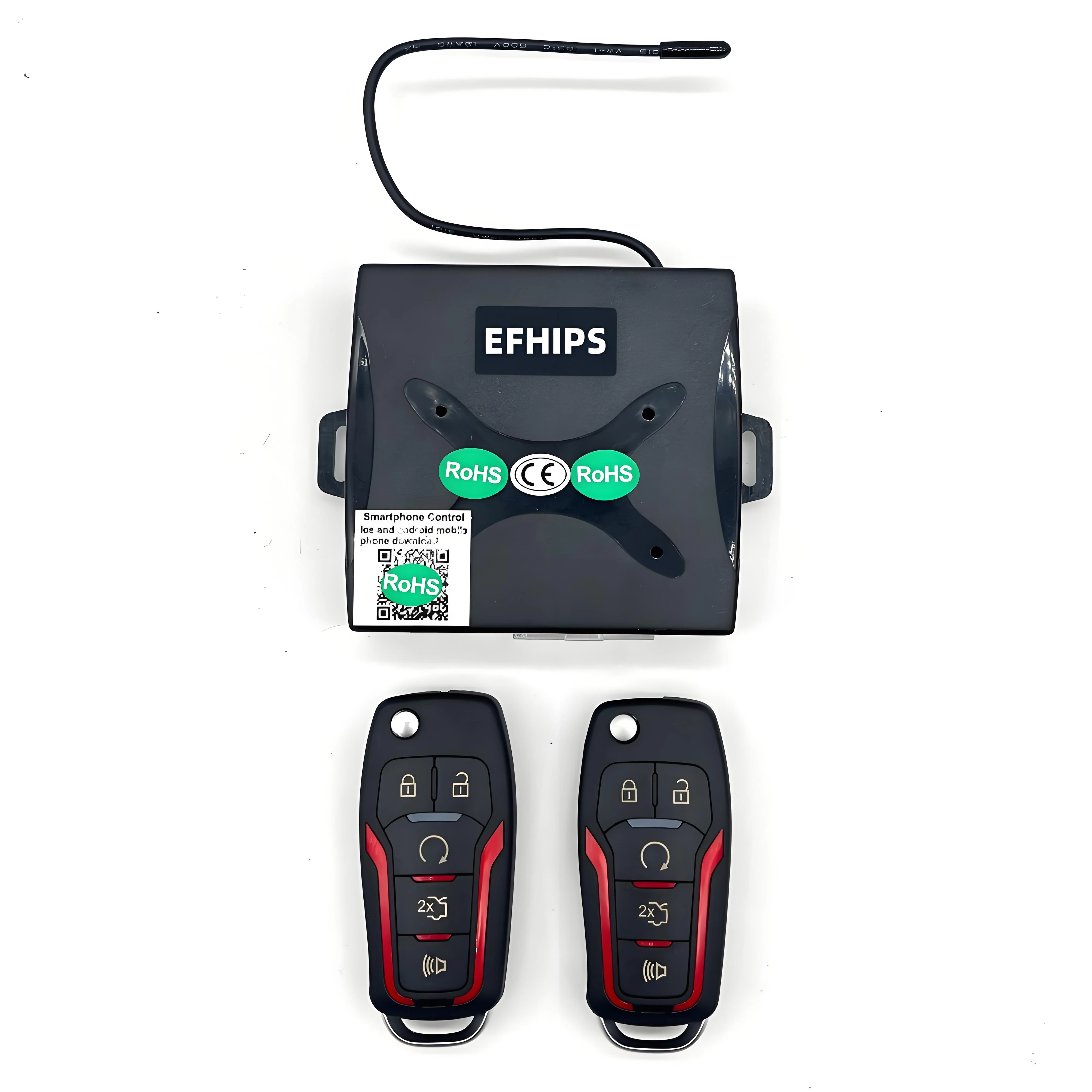
The EFHIPS 9007 is an aftermarket PKE/push button start system with remote start, keyless entry, alarm functions and app control. During an installation, it interfaces with vehicle circuits such as ACC, ignition, starter and brake/start authorization. The exact vehicle-side wiring is not universal, so a Dodge installation must be verified by function rather than by assuming that a wire color found online is correct for every year or trim.
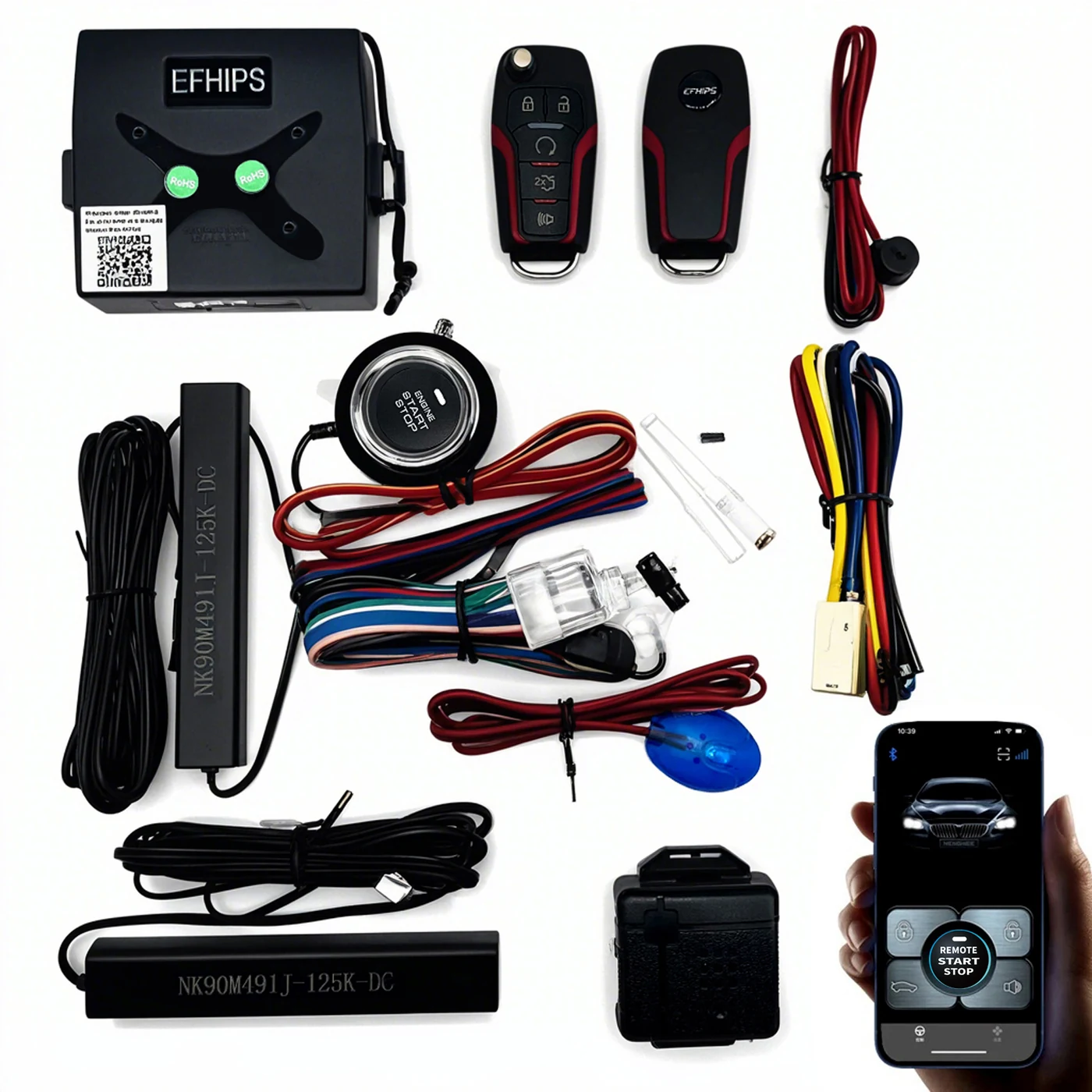
If the vehicle starts normally with the original key arrangement but develops a crank-no-start condition only after the conversion, concentrate first on the interfaces that changed: immobilizer recognition, ignition feeds, starter sequencing, brake input and any external bypass module.
3. Check the Dodge SKIM / SKREEM Immobilizer Before Rewiring Everything
Many Dodge and Chrysler-platform vehicles use a transponder-based security system commonly described as SKIM (Sentry Key Immobilizer Module) or SKREEM (Sentry Key Remote Entry Module). The names and architecture vary by year and model, but the important point is the same: the vehicle may require a valid transponder/key authorization before the engine-management system allows the engine to keep running.
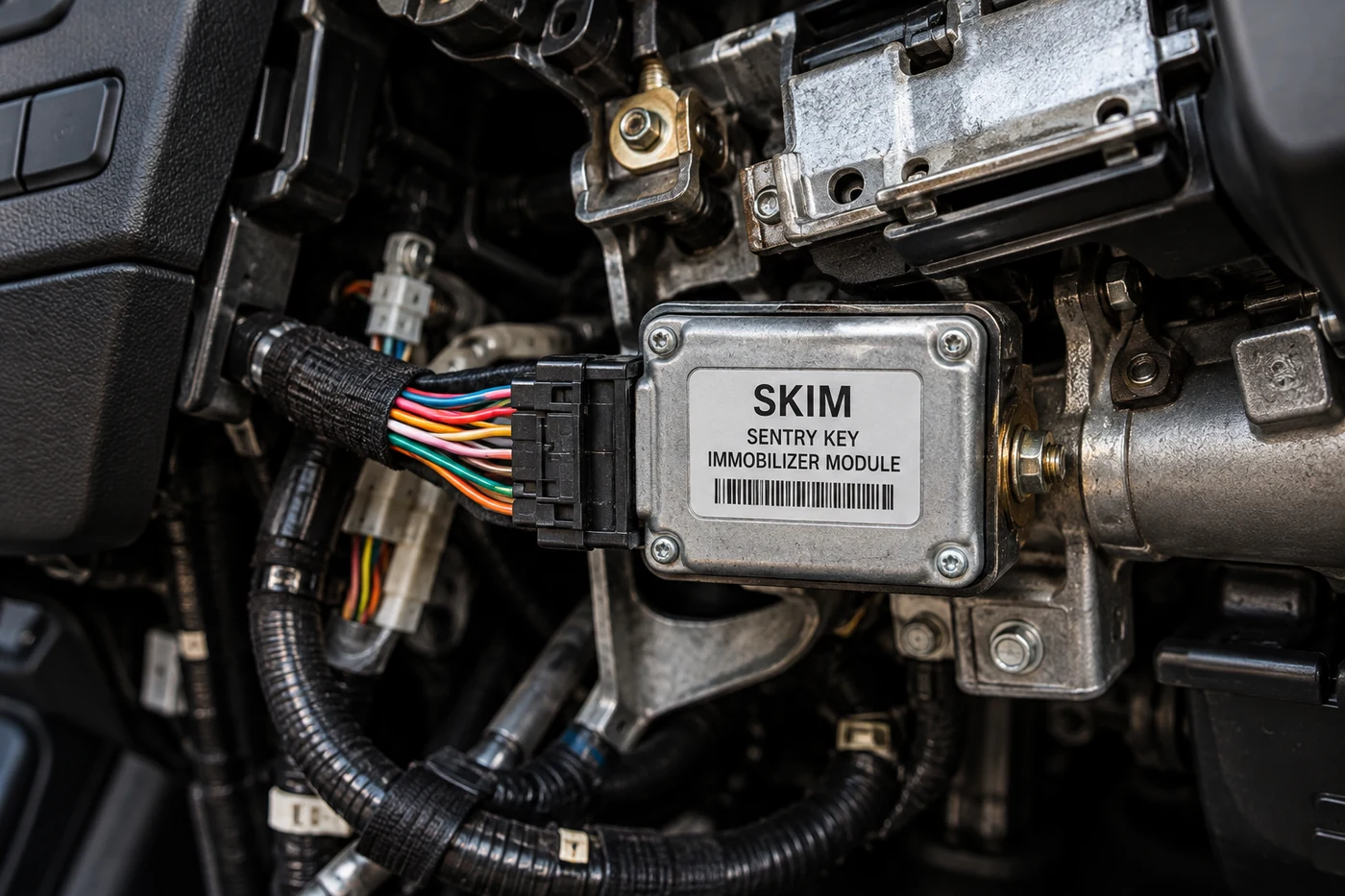
Typical immobilizer clues include an engine that cranks normally but never fires, an engine that starts for a second and stalls, a security indicator that remains on or flashes, or a vehicle that works with the original key arrangement but not through the aftermarket start sequence.
Do not assume every Dodge needs the same bypass module. A bypass solution, when required, must match the exact model year, engine and factory security configuration, and it must be wired and programmed according to the bypass manufacturer's instructions.
4. Verify Brake Input and Start Authorization
The brake-pedal signal is part of the start logic on many push button start installations. If the input is missing, unstable or the wrong polarity, the system may not enter the intended starting sequence. Depending on the installation and control logic, the symptom can be no crank, an incomplete start sequence or inconsistent behavior.
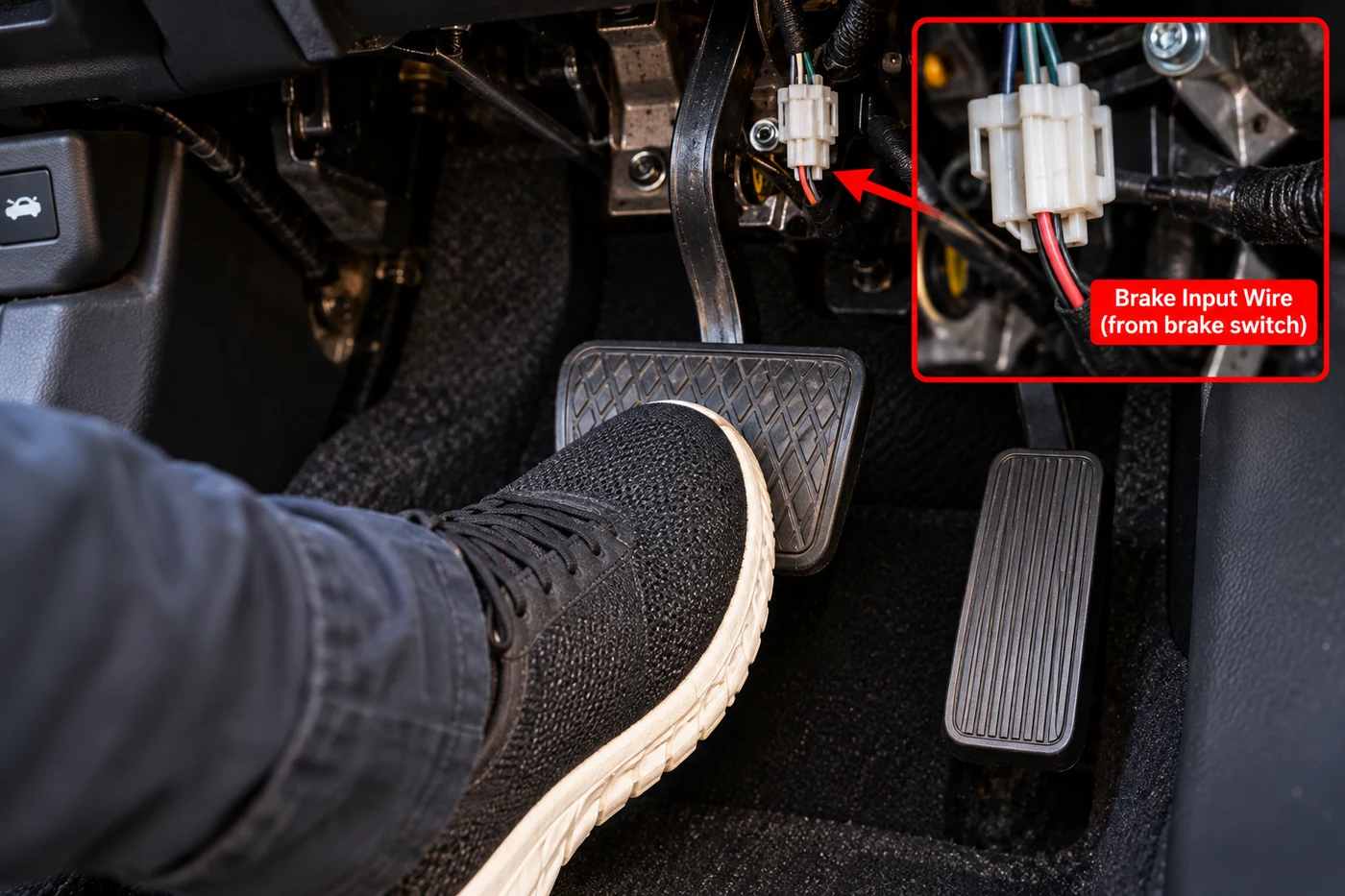
Use a digital multimeter to verify what the brake-switch wire actually does with the pedal released and pressed. The EFHIPS installation must receive the signal type expected by the system. If the vehicle provides the opposite polarity, a correctly wired relay interface may be required.
5. Measure ACC, IGN1, IGN2 and START During the Actual Crank Event
This is one of the most important tests in a Dodge push button start crank-no-start diagnosis. A static voltage reading before cranking is not enough. You need to know which circuits remain powered while the starter is turning.
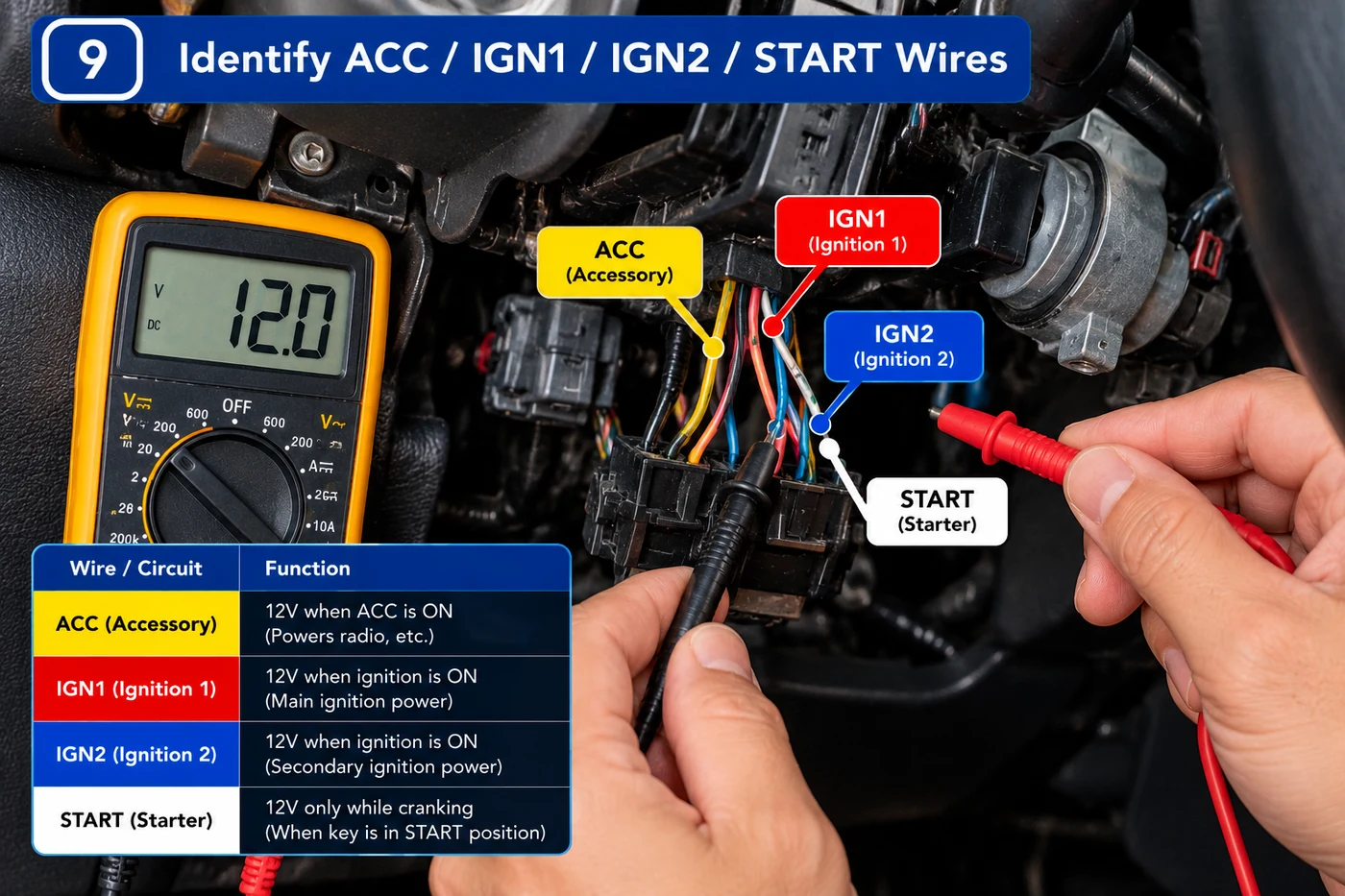
| Circuit | What to verify | Why it matters |
|---|---|---|
| ACC | Accessory operation in the expected modes. | Some accessories may intentionally drop out during crank. |
| IGN1 | Required primary ignition power remains available during START. | Loss of a required PCM/engine-management feed can produce a crank-no-start. |
| IGN2 | Confirm whether the specific vehicle requires a second ignition feed and when it must be powered. | IGN2 is not simply “another accessory” circuit. |
| START | Starter output is active only for the intended crank period. | Confirms correct starter control without keeping the starter engaged. |
If the starter cranks but a required ignition feed disappears at the same moment, the engine can turn over normally and still have no spark, injector operation or PCM power where the vehicle expects it.
6. Check Constant 12V Power, Ground Quality and Voltage Drop
A control module can click relays and still malfunction under load if its power supply or chassis ground is weak. Verify the EFHIPS module's constant power feed through the correct fuse and confirm a low-resistance ground to clean chassis metal. Then watch battery/system voltage while cranking.
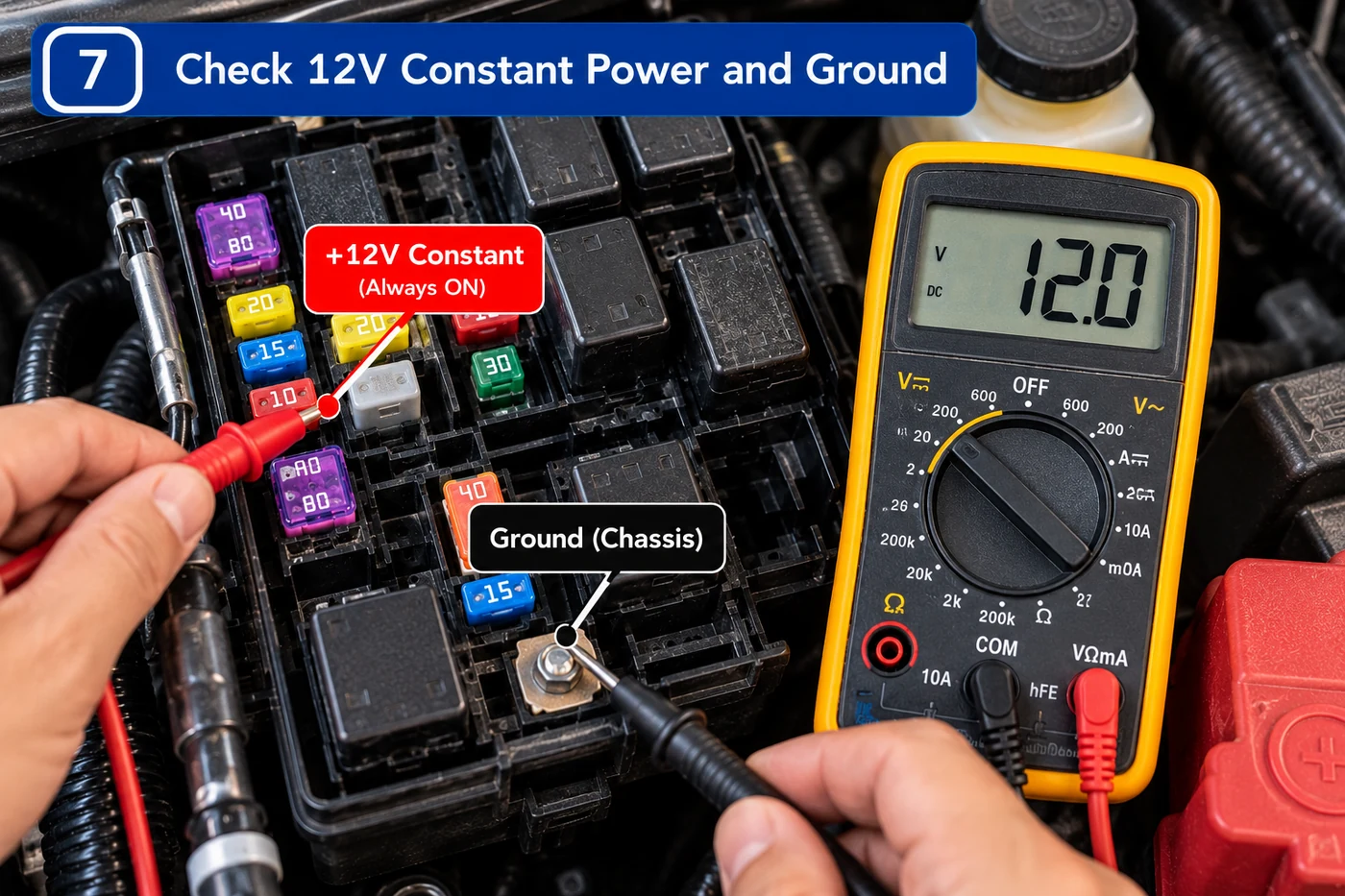
Inspect crimp joints, relay connections, fuse taps, ring terminals and any splice made during the installation. Loose or high-resistance connections can create intermittent no-start symptoms that look like a software or module failure.
7. Inspect ASD Relay, Fuel-Pump Power and Engine-Management Supply
On many Dodge applications, the ASD (Automatic Shutdown) relay is part of the engine-management power path. Depending on the vehicle, a fault in the ASD-related circuit can remove power from components needed for the engine to run. Fuel-pump operation and related fuses/relays also deserve attention once immobilizer and ignition wiring have been checked.
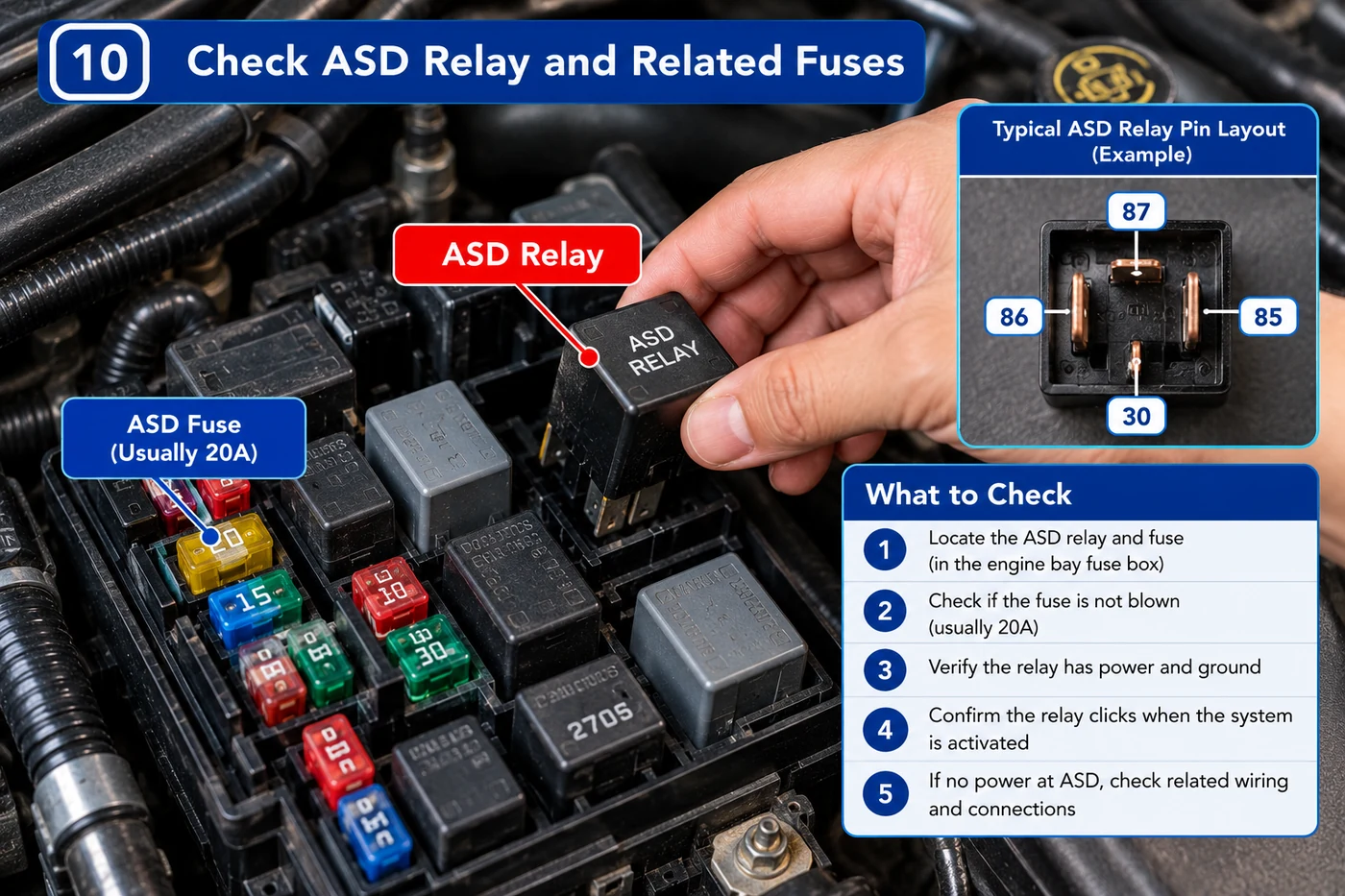
Listen for normal fuel-pump priming where applicable, confirm the related fuse is intact, and verify that the required relay is being commanded and has the correct power and ground. If the vehicle cranks but has no fuel pressure or no power to engine-management loads, continue diagnosing the vehicle-side circuit rather than repeatedly changing push-button wires.
8. Read OBD2 Trouble Codes Before Guessing
If basic power, ignition and immobilizer checks do not reveal the problem, scan the vehicle. Diagnostic trouble codes can point toward security authorization, low system voltage, crank/cam sensor faults, module communication or other engine-side problems that have nothing to do with the aftermarket button itself.
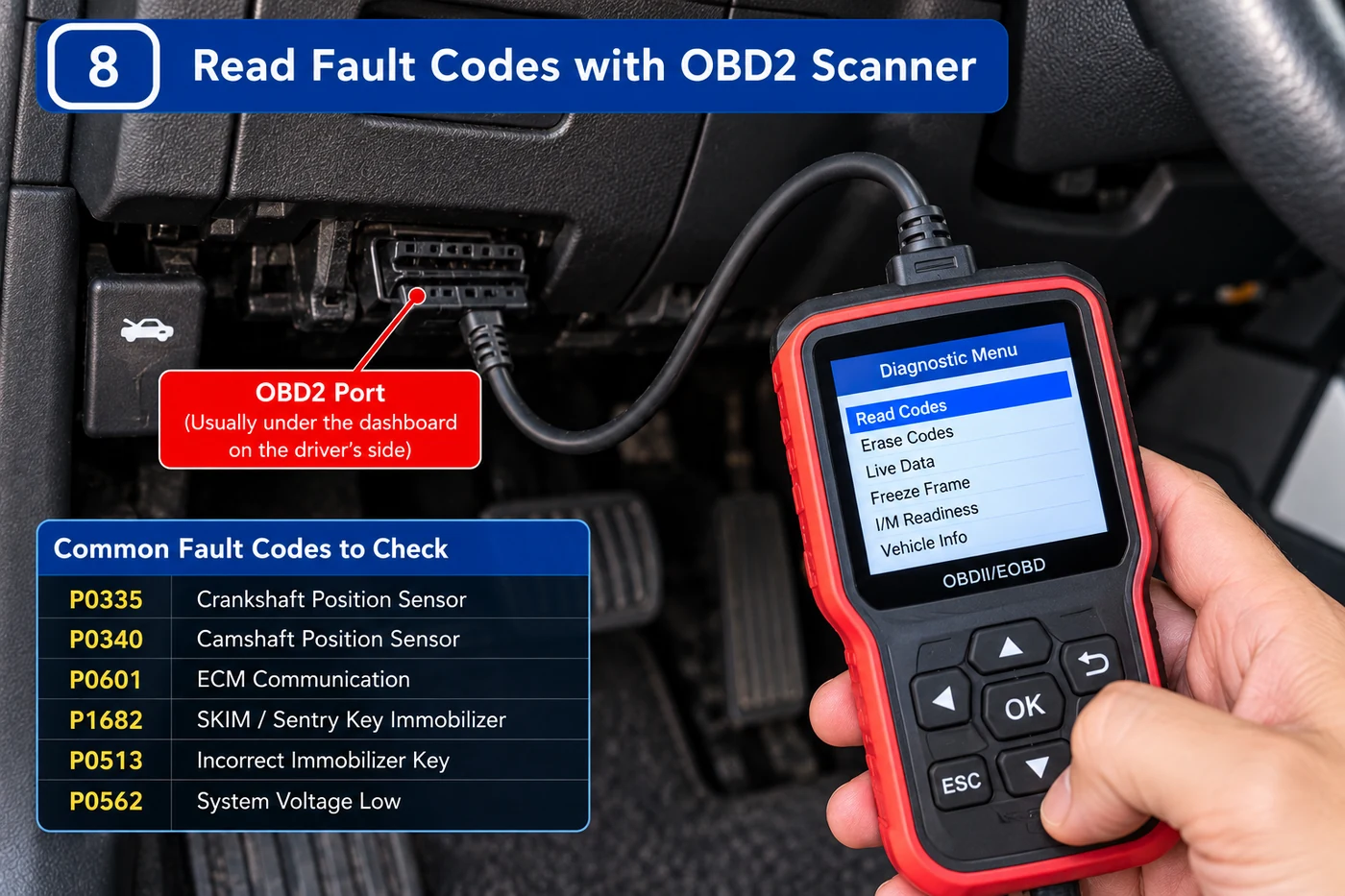
Do not replace parts simply because a code appears. Use the code together with live measurements, wiring checks and the sequence of events that occurs when the START button or remote start command is used.
9. Compare Push-Button Start and Remote-Start Behavior
A useful diagnostic shortcut is to compare two start paths. If the vehicle starts correctly from the cabin push button but fails only during remote start, focus on signals and conditions that are unique to the remote-start sequence: immobilizer bypass activation, parking-brake/safety logic, engine-running detection and the timing of ignition outputs.
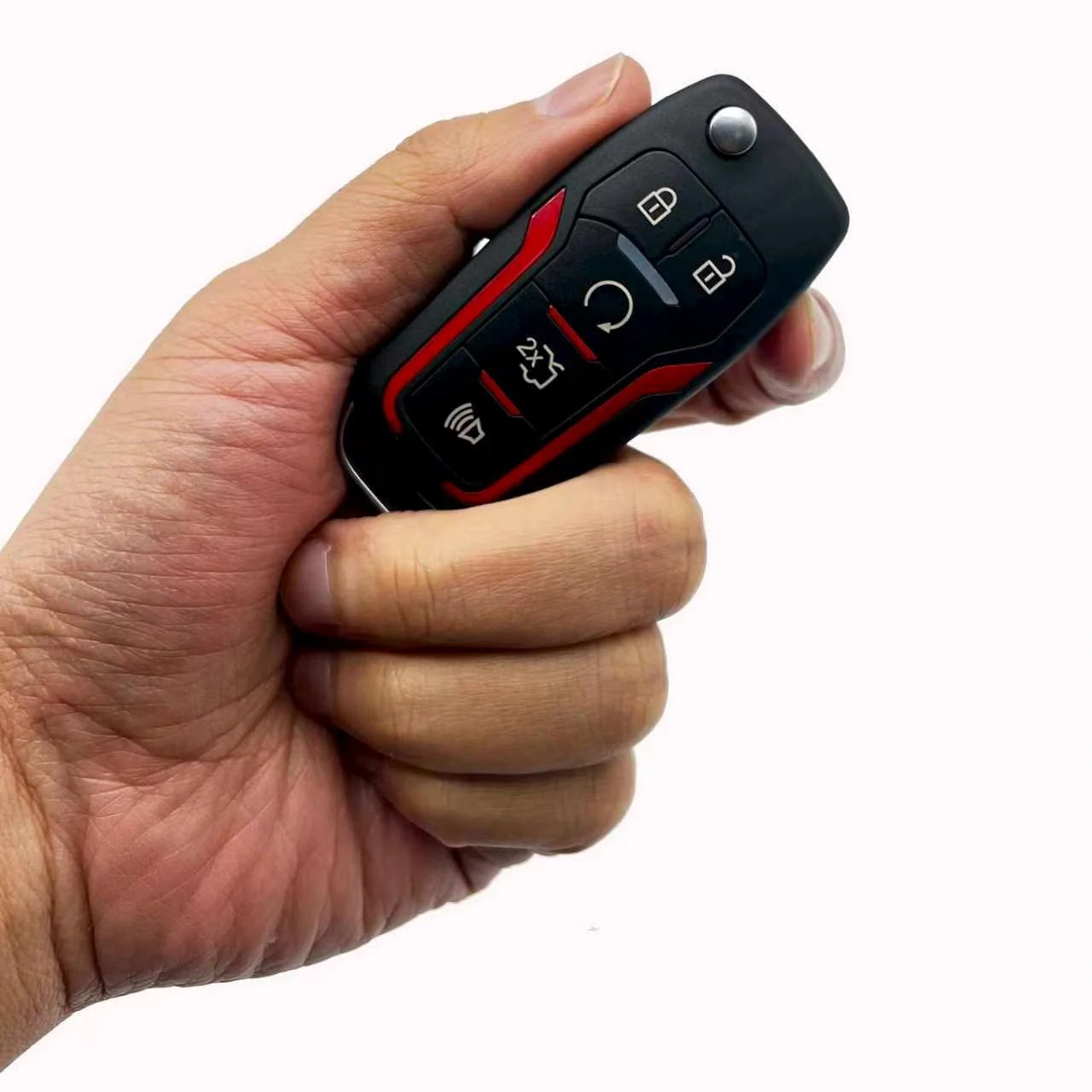
If both push-button start and remote start produce the same crank-no-start symptom, the common vehicle interfaces—immobilizer authorization, ignition feeds, power/ground, fuel/ASD and vehicle faults—move higher on the list.
10. A Better Diagnostic Order for a Dodge That Cranks but Won't Start
Instead of moving wires at random, work through the problem in a fixed order:
- Confirm that the engine truly cranks at normal speed.
- Check whether the original key arrangement can still start the vehicle.
- Verify SKIM/SKREEM or other factory immobilizer authorization.
- Measure required IGN1/IGN2 power during the crank event.
- Confirm constant power, grounds and acceptable voltage under load.
- Check brake/start authorization if the sequence is inconsistent.
- Inspect ASD/fuel-pump power and related fuses/relays using vehicle-specific information.
- Read OBD2 codes and investigate any relevant vehicle faults.
- Compare push-button start behavior with remote-start behavior.
- Only after these checks should the EFHIPS control module itself become a primary suspect.
Frequently Asked Questions
Why does my Dodge crank but not start after a push button start installation?
The starter circuit may be working while the factory immobilizer, a required ignition feed, fuel/ASD power or another engine-management condition is preventing the engine from running. Measure these systems before replacing the aftermarket module.
Can SKIM or SKREEM cause a crank-no-start?
Yes. If a transponder-equipped vehicle does not receive valid key authorization, it may crank without starting or start briefly and stall. The exact behavior varies by model and year.
Does every Dodge need an immobilizer bypass for remote start?
No. Requirements depend on the exact factory security system. Identify the model year, engine and immobilizer configuration before choosing a bypass method.
Should IGN1 stay powered while cranking?
If the vehicle requires that ignition circuit during START, yes. Verify with a multimeter during the actual crank event rather than relying only on an online color chart.
If the engine cranks, does that prove the EFHIPS system is good?
It proves that at least part of the starter-control path is operating. It does not prove that every ignition, immobilizer, fuel or engine-management requirement is correct.
Need the EFHIPS 9007 product details?
Review the complete push button start, PKE and remote start system specifications before installation.
View EFHIPS Push Button Start System →Installation note: Vehicle wiring, immobilizer systems and relay assignments vary by model year and configuration. This article is a troubleshooting framework, not a substitute for the correct factory wiring information. Use a digital multimeter, protect circuits with appropriate fusing, and use professional installation support when needed.