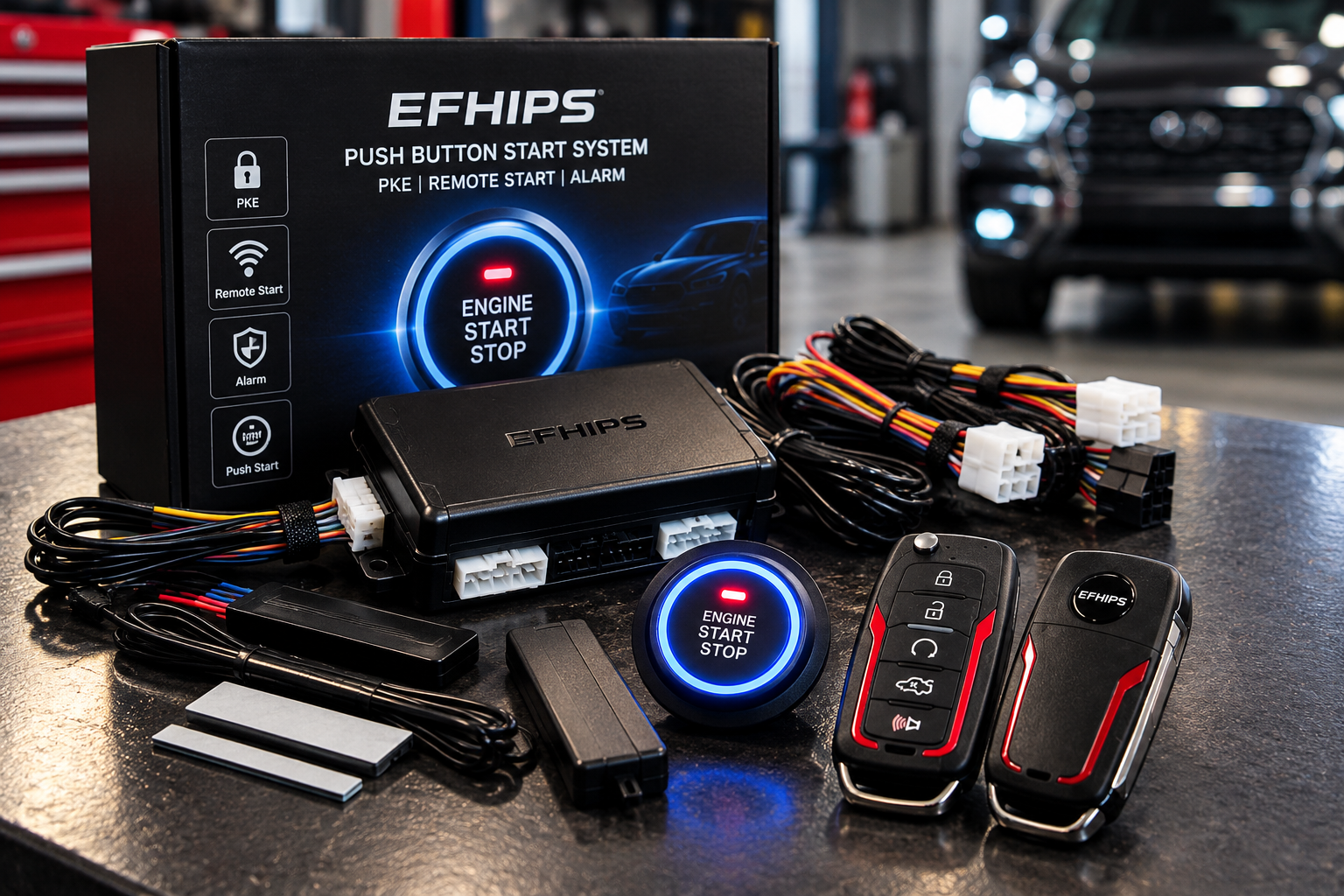
Remote Start, PKE and Push Button Start: How the Complete Aftermarket System Works Together is best understood as a system-level upgrade rather than a dashboard-button modification. The useful question is how the remote, PKE logic, control module, vehicle wiring and start button work together in real daily use.
The Control Module Is the Center of the System
A complete aftermarket push-button system is different from a simple momentary starter switch. The control module coordinates the inputs and outputs needed for functions such as ACC, ignition, starter control, PKE, locking, alarm behavior and remote start.
The button is therefore an interface, not the entire system. When the driver presses it, the module uses the connected vehicle inputs and its programmed logic to determine what should happen next.
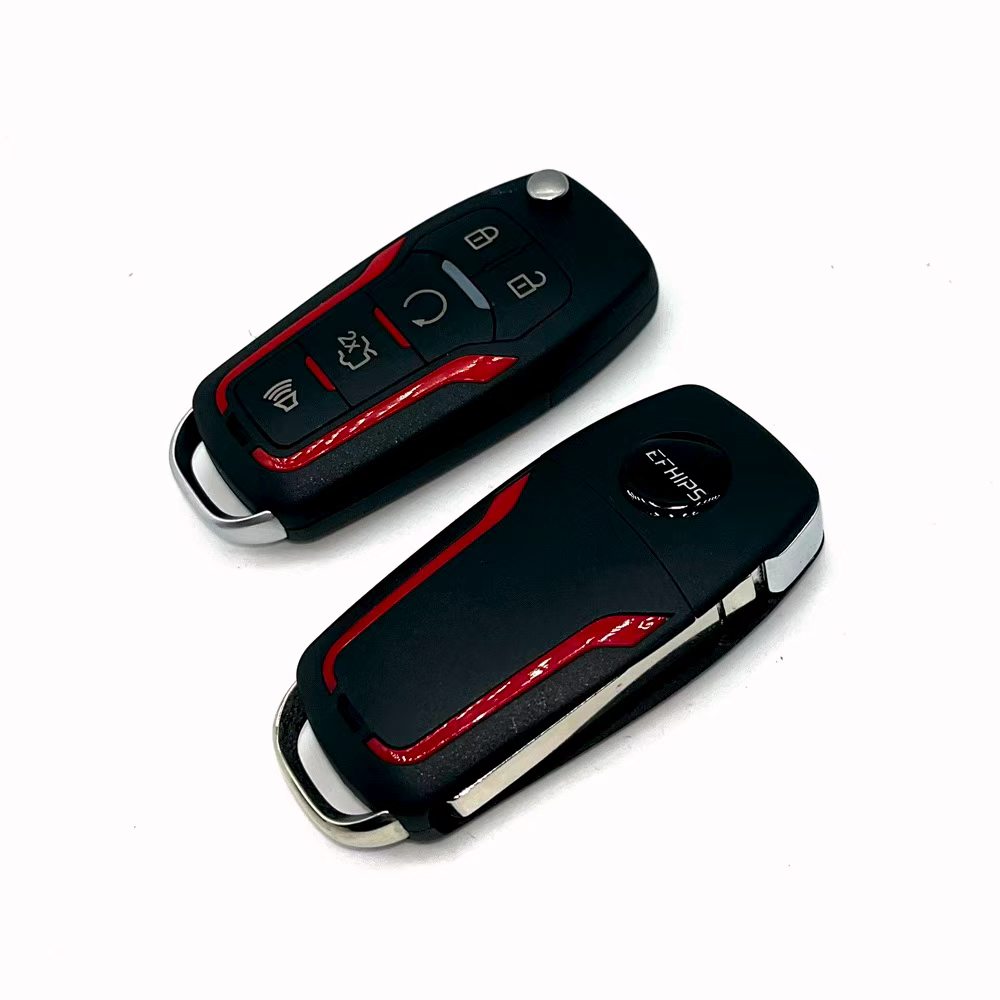
PKE and the Remote Fobs Handle Vehicle Access
PKE uses the supplied remote fob and system antennas to detect the authorized remote around the vehicle. The exact lock and unlock behavior depends on how the system is configured and how the vehicle door-lock circuit is integrated.
The remote can also provide manual commands. That gives the driver a familiar fallback even when passive entry is not the preferred mode for a particular situation.
Remote Start Depends on Several Vehicle Signals
Remote start is not simply a starter-wire pulse. The system needs the ignition sequence to be correct and may need brake, engine-running and other safety-related inputs before and during operation. Some vehicles also require an immobilizer bypass solution.
Incorrect identification of an ignition or starter circuit can cause no-crank conditions, accessory problems or repeated starting attempts. Testing the actual vehicle with a digital multimeter is a basic part of the job.
Why Factory Anti-Theft Systems Matter
Factory anti-theft systems remain one of the most important compatibility questions. A vehicle can have conventional metal-key ignition wiring and still require a coded key or transponder authorization before the engine is allowed to run.
An aftermarket system should not be assumed to bypass that protection on its own. The installer needs to identify the factory system first and use an appropriate integration method where required.
What a Clean Finished Installation Should Look Like
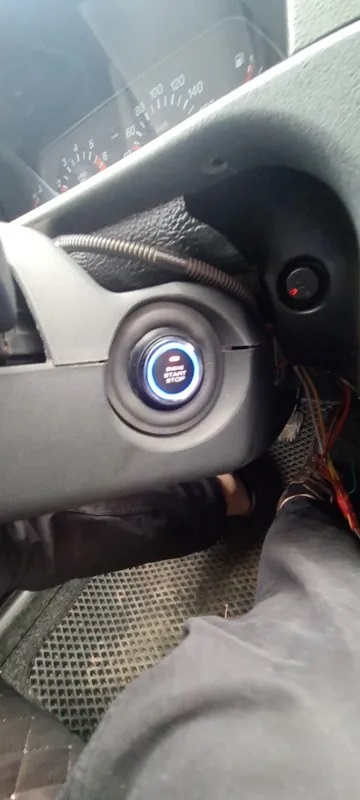
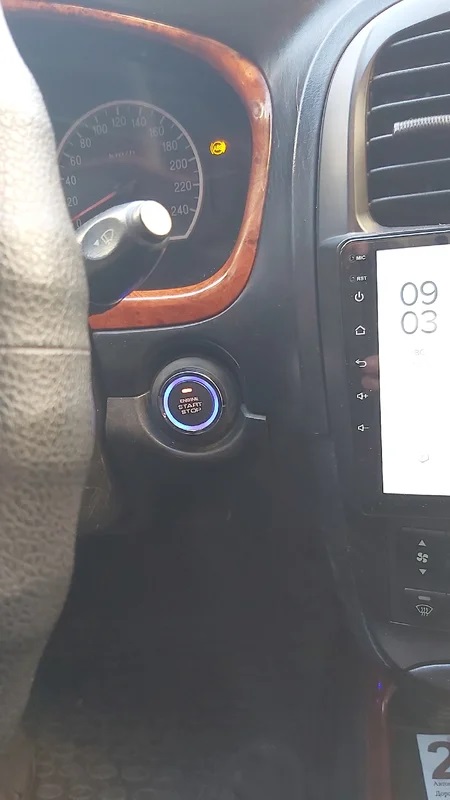
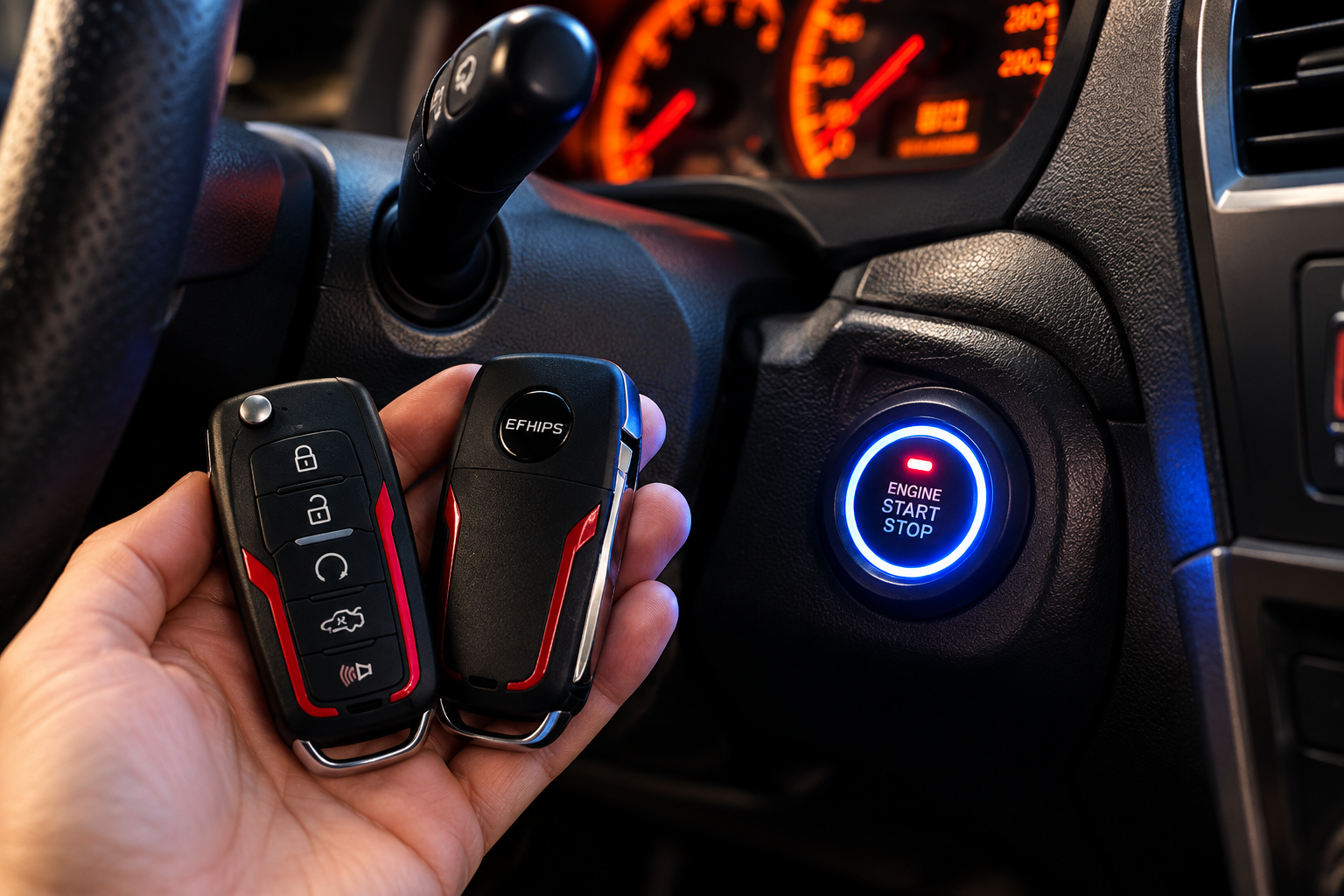
From the driver seat, a finished installation may show only the illuminated ENGINE START STOP button. The control module, harnesses and related connections should be secured behind the dashboard, away from pedals, steering components, sharp edges and heat.
Before the trim is reassembled, test normal starting, shutdown, brake behavior, lock and unlock operation, remote functions and any factory features affected by the work. Correct problems while the wiring is still accessible.
Pre-Installation Checklist
- Confirm the vehicle starts normally before modification.
- Identify the factory immobilizer or anti-theft system.
- Verify power, ACC, ignition and starter circuits with a multimeter.
- Check door-lock logic before connecting PKE functions.
- Plan secure mounting for the control module and harnesses.
- Test all functions before reinstalling dashboard trim.
Related Reading
- Understanding ACC, IGN1, IGN2 and Starter Outputs
- Factory Immobilizers and Aftermarket Push Button Start
- Remote Start Parking Brake and Engine Detection
- Troubleshooting ACC, IGN and START Circuits
Planning a Complete Push Start Upgrade?
Review the vehicle ignition, immobilizer and lock logic before installation.
Browse EFHIPS Systems →Professional installation is recommended when vehicle circuits cannot be confidently identified.