If you are replacing an older starter button or adding a push-button starter to a custom 12V project, the first question is simple: what does the switch actually control?
A universal 12V push button start switch is not automatically a complete keyless ignition system. The EFHIPS metal switch is a wired control component designed for 12V electrical applications where the vehicle or equipment wiring can be correctly integrated with the switch.
.png)
What Comes with the 12V Push Button Start Switch
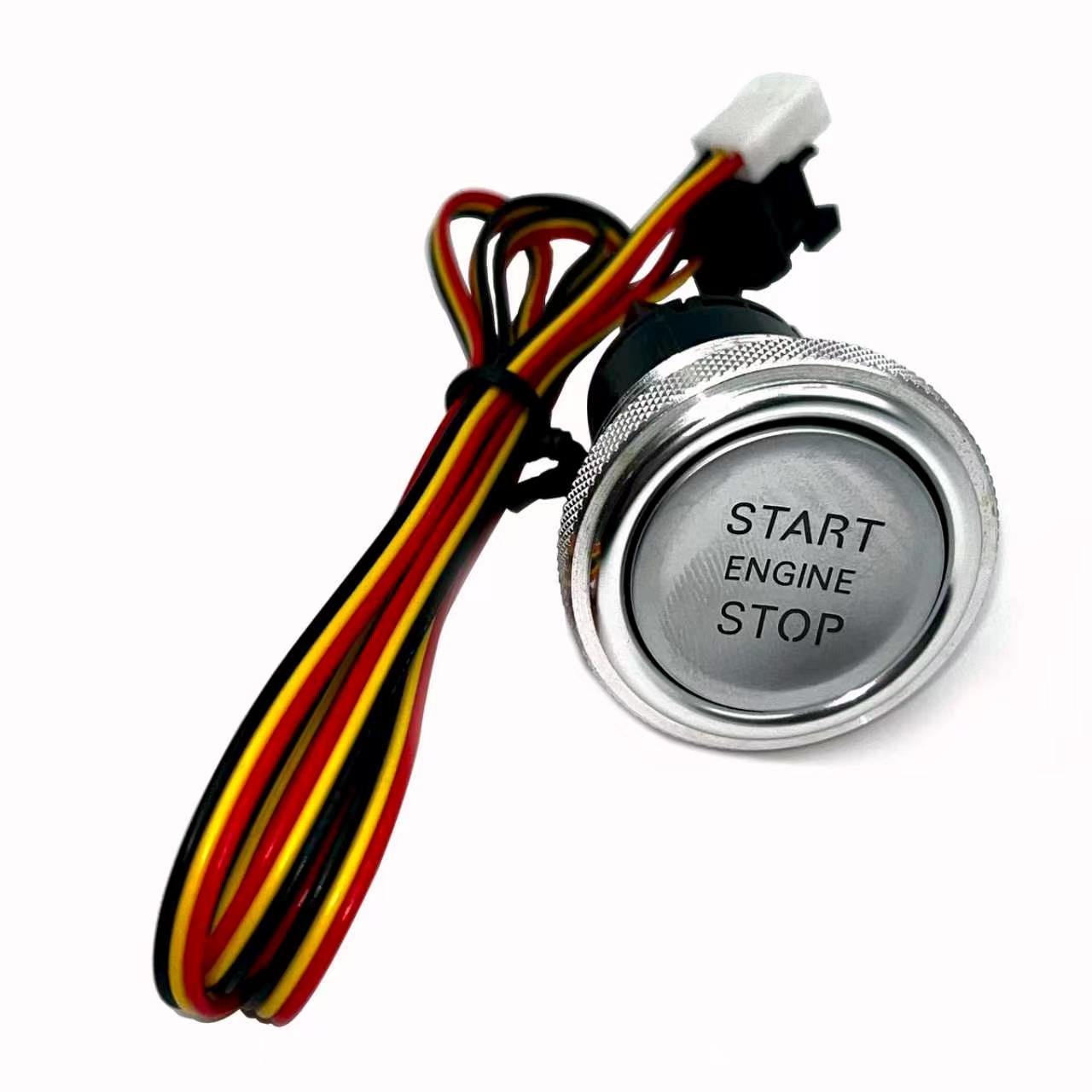
The main component is the round metal push button marked START ENGINE STOP. It uses a chrome-finish outer bezel and a rear body designed to mount through a dashboard or custom panel.
The switch is supplied with a pre-attached wiring harness. That saves you from having to fabricate a connector directly at the back of the button, but the other end still has to be integrated correctly with your vehicle or equipment.
- 12V START ENGINE STOP push button switch
- Chrome-finish metal outer bezel
- Rear switch body and mounting section
- Pre-wired multi-wire harness
- Electrical connectors attached to the switch harness
You can see the current product configuration on the EFHIPS 12V push button start switch product page.
How the Metal Start Engine Stop Button Works
The words START ENGINE STOP can make a simple switch look more complicated than it is. Electrically, you need to think about the function of the switch and the circuit it is controlling rather than the wording printed on the button.
In a typical 12V starting circuit, the starter motor is not something you should treat like a small accessory. Starting an engine involves a high-current electrical system, usually controlled through a starter solenoid or relay.
The button is part of the control circuit
The push button provides a convenient dashboard control point. How it interacts with ACC, ignition and starter circuits depends on the electrical configuration of the vehicle and how the installer wires the system.
- Constant +12V power
- Ground
- Accessory or ACC circuit
- Ignition circuit
- Starter/crank circuit
- Any required starter relay
- Factory immobilizer or security circuit
Warning: Never connect a small dashboard switch directly to a high-current starter motor circuit unless the electrical design specifically supports that configuration. Use the correct relay, fuse protection and wire gauge for the circuit. Disconnect the battery before modifying 12V power wiring.
Understanding the Pre-Wired Harness and Connectors
A pre-wired harness makes physical installation cleaner because the connections at the rear of the button are already assembled. It does not mean the remaining wires can simply be matched to whatever vehicle wires have similar colors.
.jpeg)
Do not identify vehicle circuits by color alone
Wire colors are useful when you already have verified documentation, but color by itself is not a reliable electrical test. A red wire is not automatically constant power, and a black vehicle wire should not automatically be treated as ground.
For an older vehicle, a digital multimeter is usually one of the most useful tools on the bench.
- Confirm battery voltage.
- Locate a verified chassis ground.
- Identify constant 12V power.
- Test the ACC circuit through the key positions.
- Test the primary ignition circuit.
- Identify the starter/crank signal.
- Check whether additional ignition circuits remain powered during cranking.
SRS / Airbag Warning: Do not probe unknown yellow connectors or wiring associated with the Supplemental Restraint System. Airbag circuits require specific service procedures. If you cannot positively identify a connector, stop and obtain the correct wiring information before testing it.
What This Switch Can — and Cannot — Replace
A universal metal starter switch can be useful as a replacement or added control in a properly designed 12V circuit. It should not automatically be treated as a replacement for every electronic function contained in a modern factory ignition system.
.jpeg)
A starter switch is not automatically an immobilizer bypass
Many vehicles from the 1990s through the 2010s use some form of factory anti-theft or transponder system. Common examples include Ford PATS, GM Passlock, Chrysler SKIM, Nissan NATS and other manufacturer-specific immobilizer systems.
- The original transponder key
- A correctly recognized transponder
- A separate bypass/interface solution
- Retention of part of the original ignition system
- Vehicle-specific programming or wiring
It is also different from a complete PKE system
A full push-button conversion system can include much more than a dashboard switch. Depending on the system, it may control ACC, ignition, starter operation, passive keyless entry, remote start, door locks and security functions.
Where a Universal 12V Starter Switch Makes Sense
Universal switches work best when the installer understands the existing electrical system and has a clear reason for adding or replacing the control.
Typical applications can include older cars, work trucks, project vehicles, custom dashboards, boats and other 12V electrical installations.
Older cars and project vehicles
An older vehicle with a conventional ignition system can be easier to understand than a late-model vehicle with multiple control modules. That does not make every older vehicle plug-and-play, however.
Work trucks and custom dashboards
A metal panel-mounted switch can make sense when a damaged or inconvenient starter control is being replaced as part of a custom electrical installation.
Boats and marine applications
A 12V electrical system does not automatically make an automotive wiring method suitable for a boat. Marine installations introduce moisture, corrosion and different grounding considerations.
Marine Safety: Connections used in a boat or other wet environment need appropriate protection against moisture and corrosion. Fuel vapors are also a serious concern around gasoline-powered boats. Do not modify ignition or starter wiring near fuel-system components without following the appropriate marine electrical and safety requirements.
When you should stop before installing
- Is the electrical system 12V DC?
- What circuit will the button control?
- Where is the circuit fused?
- Does the starter circuit require a relay?
- Does the vehicle have a factory immobilizer?
- Are there multiple ignition circuits?
- Is there enough space behind the mounting panel?
- Can the harness be routed away from moving and hot components?
.jpeg)
Before You Order
The useful way to think about this product is as a universal 12V electrical switch, not a promise of plug-and-play compatibility with a specific vehicle.
Need a Standalone 12V Start Button?
View the EFHIPS chrome metal START ENGINE STOP switch and its pre-wired harness.
View 12V Push Button Switch →Check vehicle wiring, mounting space and immobilizer requirements before installation.