Cranking proves only one part of the system works
When the starter motor turns, it confirms that the START output is doing something, but it does not prove that the engine-control systems are receiving everything they need. The engine may still be missing an ignition feed, fuel authorization or immobilizer approval.
First compare the key-start and push-start sequences
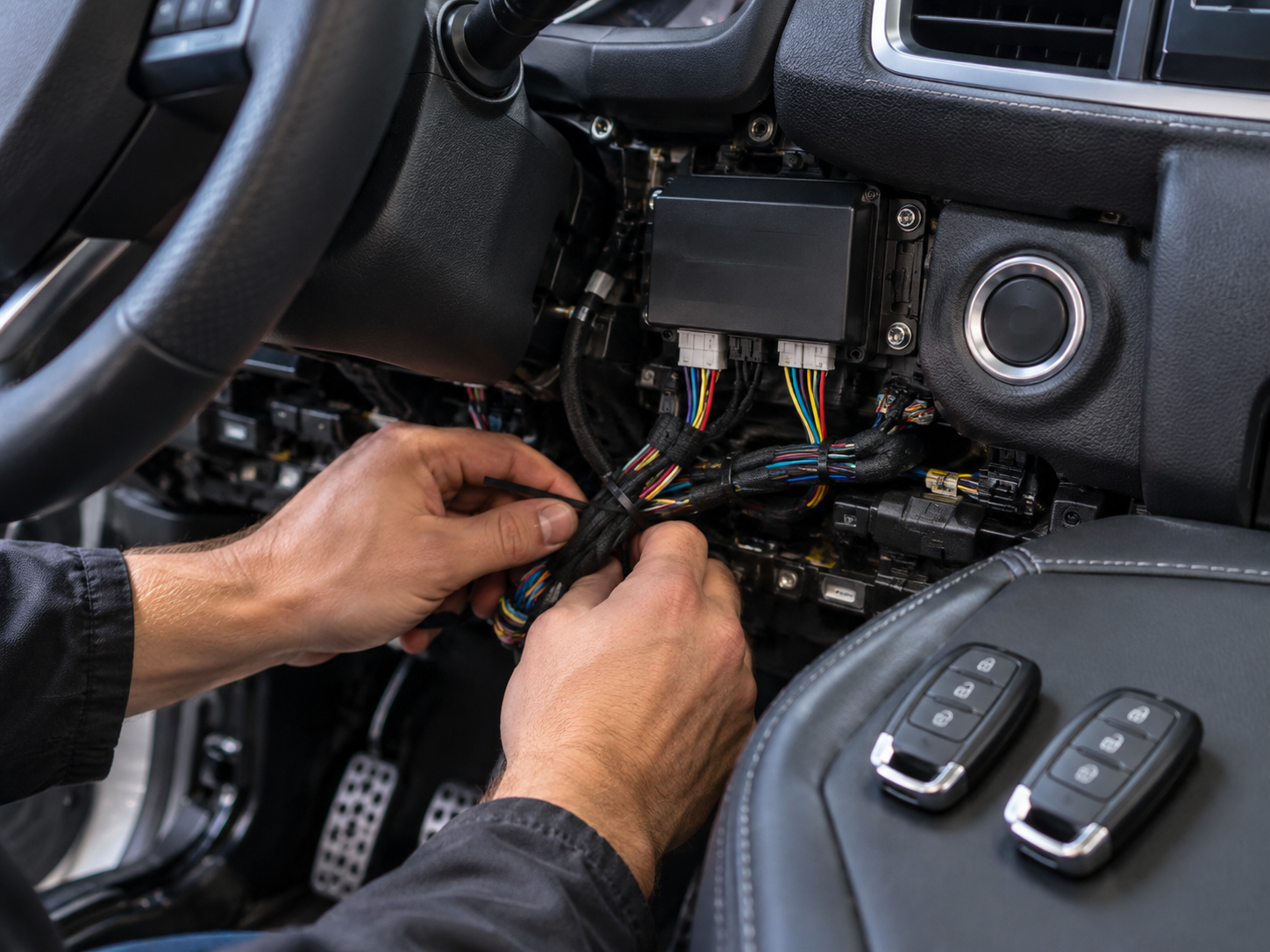
A useful diagnostic method is to compare what happens electrically when the factory key starts the engine versus what happens when the aftermarket system tries. Check whether ACC drops out correctly during crank, whether IGN1 remains powered, and whether any secondary ignition circuit is also required. The goal is to reproduce the original sequence, not simply energize the starter.
Second check the immobilizer or transponder system
Many vehicles from the late 1990s onward use a chip key or factory anti-theft system. If the security indicator behaves differently during an aftermarket start attempt, the immobilizer deserves attention. The correct solution depends on the vehicle and the bypass hardware being used; there is no universal bypass method that applies to every model.
Third inspect grounds, connectors and high-current connections
A poor ground can create intermittent behavior that looks like a control-module problem. High-current ignition and starter connections also need to be mechanically secure. Tug-test every crimp or terminal, inspect connectors for partially seated pins, and avoid relying on a connection that looks right but has not been verified electrically.
Do not use remote start as the first test
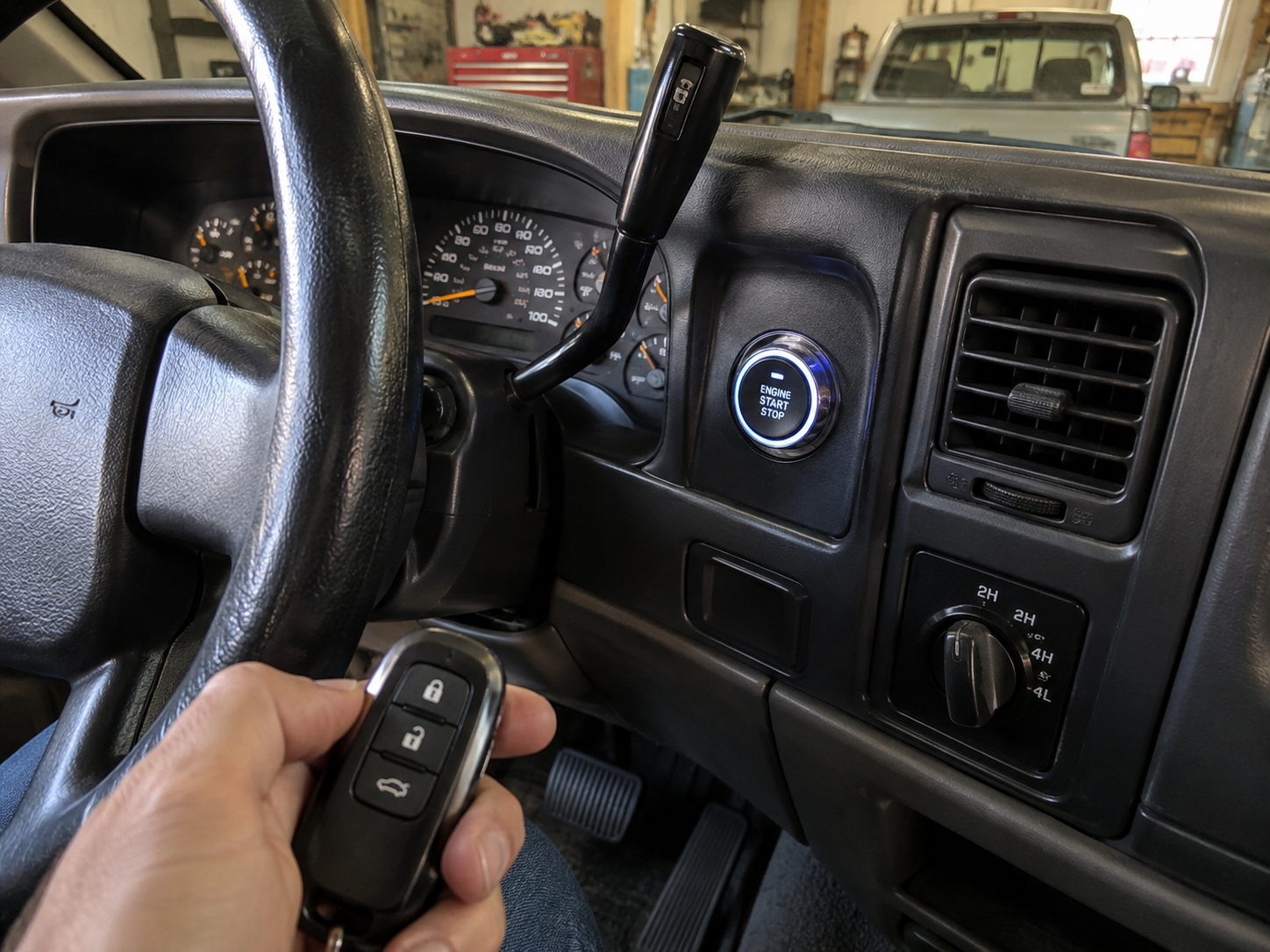
Get normal push-button starting working first. Remote start adds more logic and more inputs, so using it as the first troubleshooting method can hide the basic problem. Once manual push-button start works reliably, remote-start testing becomes much easier.
Explore the EFHIPS Push Button Start System
Review the product features, compatibility limits and installation information before beginning your project.
View Product Details