A successful installation starts before the first wire is connected
Most push button start problems are not caused by the button itself. They usually begin earlier, when the installer assumes a wire's function from color alone or starts connecting the system before understanding how the vehicle's original ignition circuit behaves. Older cars and trucks can look simple, but many still use separate ACC, ignition and starter circuits, factory immobilizers, door-lock logic and previous aftermarket wiring. Planning first can save hours later.
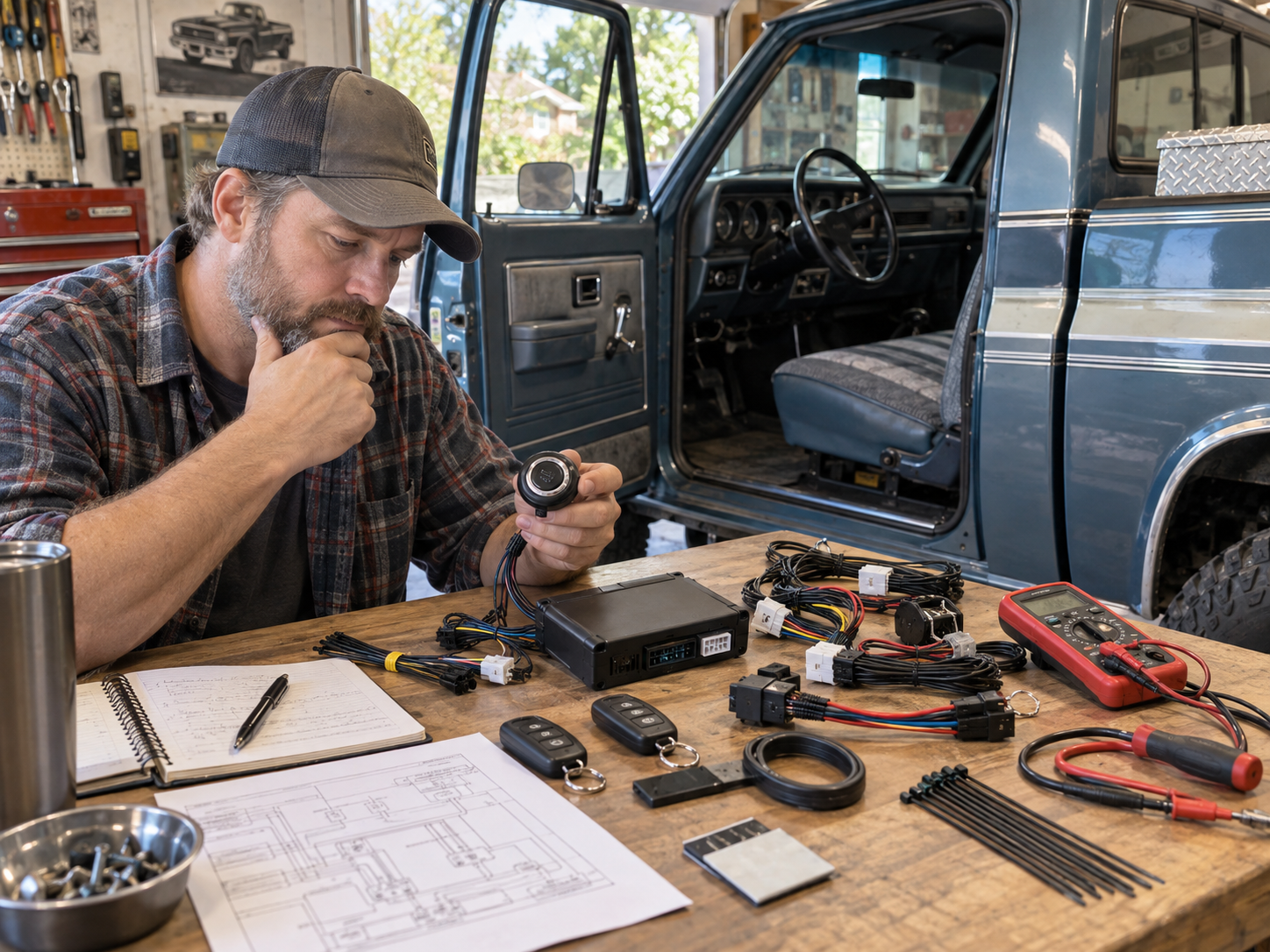
Map the original ignition sequence
The first job is to identify what the factory key switch actually does. A typical keyed vehicle may have constant 12V power, ACC, IGN1, IGN2 and START circuits. Some vehicles use only one ignition circuit; others keep a second ignition circuit powered during cranking. That difference matters. If an ignition circuit drops out at the wrong time, the engine may crank but fail to start, or accessories may behave strangely after installation.
Verify with a multimeter instead of trusting wire colors
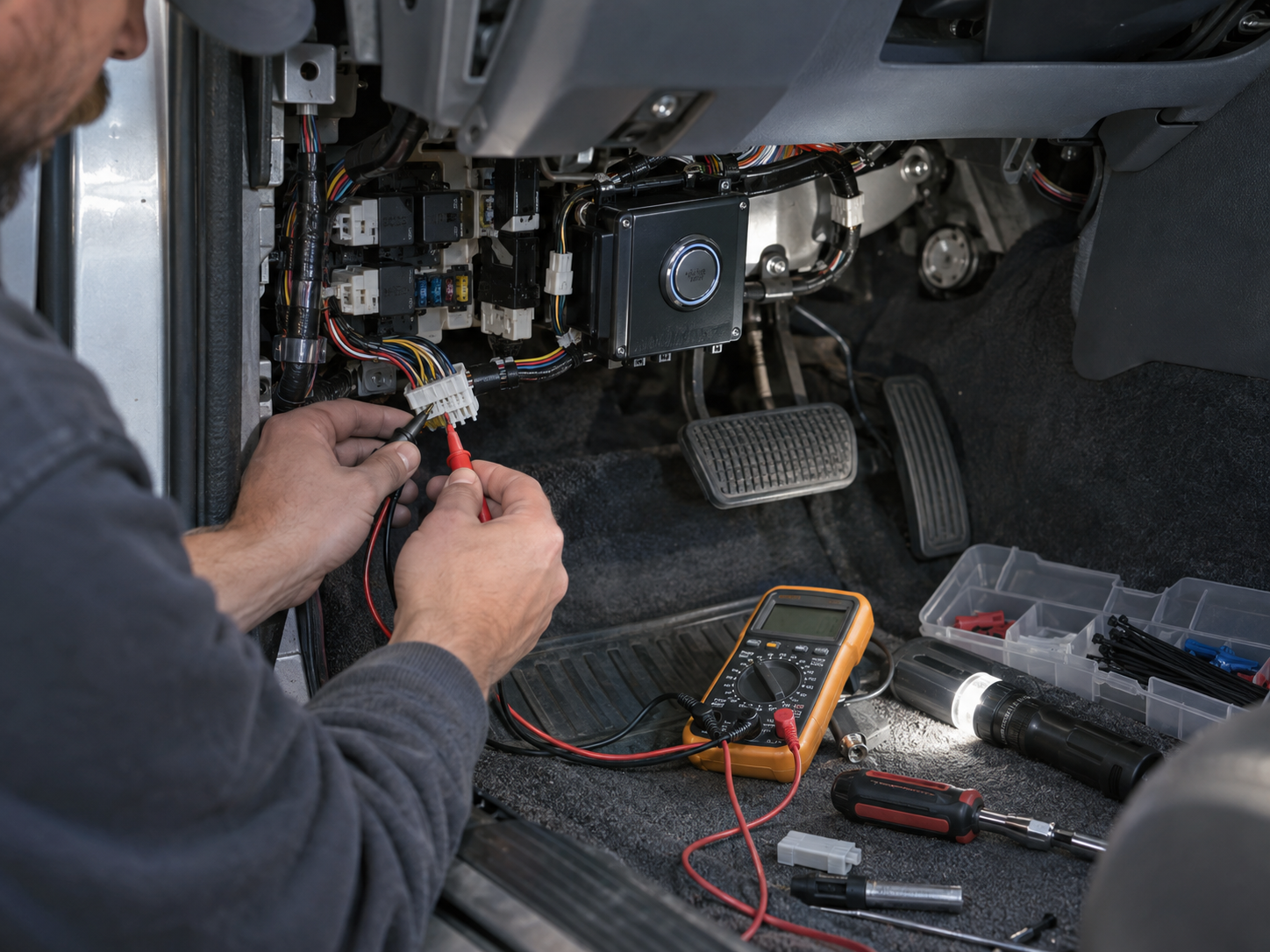
Wire-color charts can be useful references, but they are not a substitute for measurement. Trim level, model year, prior repairs and aftermarket modifications can change what is behind the dash. Measure voltage in OFF, ACC, ON and START positions and write down the result for each suspected wire before connecting the new controller.
Check for a factory immobilizer before testing the starter
A push button system can reproduce the electrical starting sequence, but that does not automatically satisfy a factory transponder or immobilizer system. If the vehicle uses a chip key, the installer may need a compatible bypass or integration solution. A vehicle that powers up and cranks but will not run may be responding exactly as the factory security system was designed to respond.
Build the system in stages
The cleanest installation sequence is usually power first, then ACC, ignition, starter, brake input, door locks, PKE and finally remote-start functions. Testing after each stage helps isolate mistakes. If everything is connected at once, one incorrect wire can create several symptoms at the same time and make diagnosis much harder.
Explore the EFHIPS Push Button Start System
Review the product features, compatibility limits and installation information before beginning your project.
View Product Details