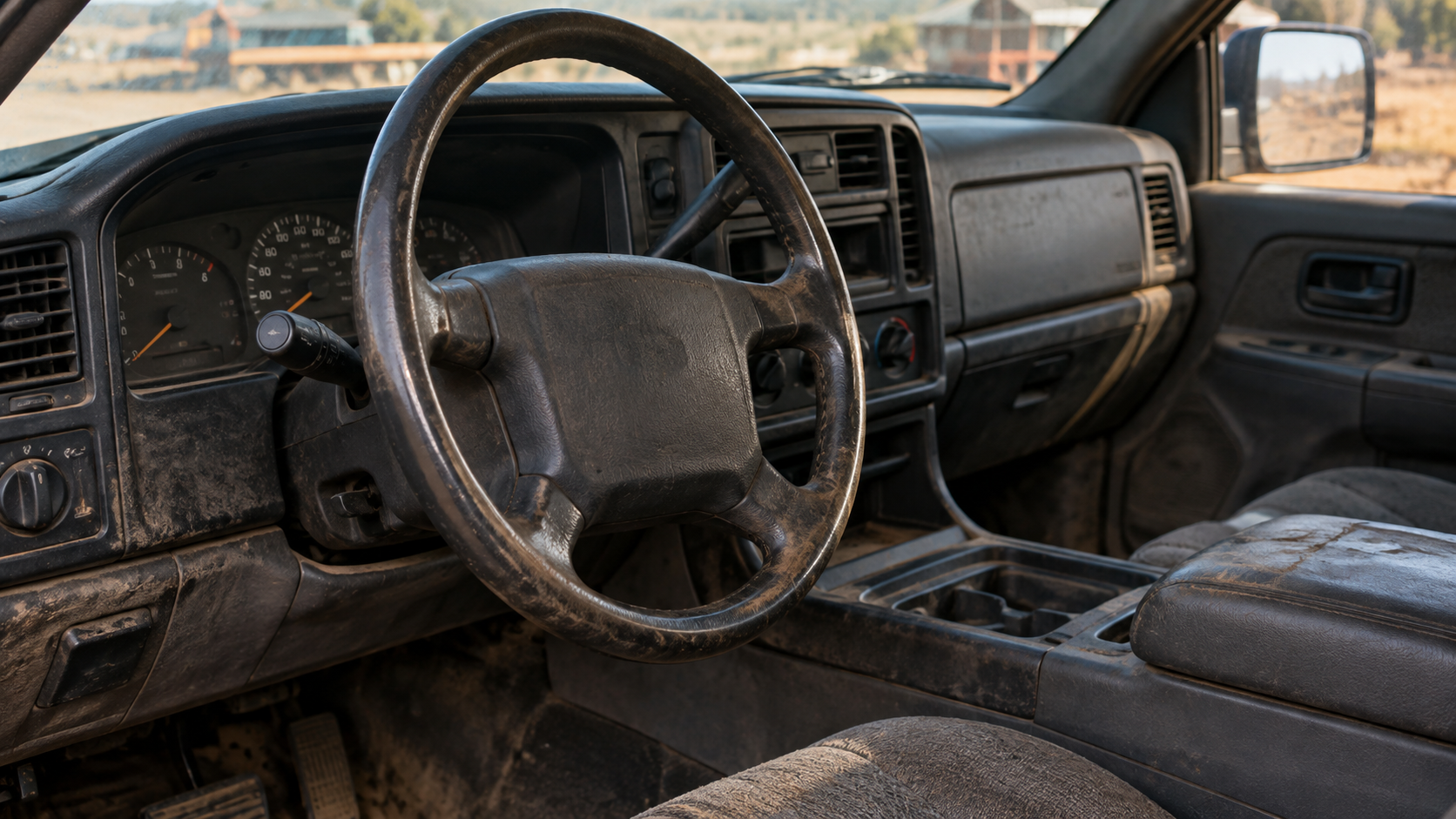
A real work truck does not need to look new to be worth improving.
There is a specific kind of old truck that earns loyalty. The interior is faded, the steering wheel has gone shiny from years of use, dirt sits deep in the floor mats, and the lower dash carries fingerprints, dust, and the occasional oily mark from previous repairs. Yet the engine still runs well, the transmission still does its job, and the truck continues to show up every morning.
For owners of vehicles like this, replacing the truck just to gain modern convenience can feel wasteful. That is where a push button start upgrade for an old work truck begins to make sense. The goal is not to pretend the vehicle is new. The goal is to remove some of the small, repeated annoyances that make a dependable older vehicle feel more dated than it really is.
The Truck Is Old — But the Problem Is Often the Daily Routine
When people say an older vehicle feels “old,” they are not always talking about performance. A well-maintained 15- or 20-year-old truck may still accelerate, tow, haul, and commute perfectly well. What usually feels dated is the interface between the driver and the vehicle.
- Pulling out the key every time you get in.
- Working around a worn ignition cylinder.
- Using an aging remote or manually unlocking the doors.
- Starting a cold or hot cabin and waiting inside.
- Repeating the same old routine several times every day.
Those actions are small, but they happen constantly. That is why a convenience upgrade can change the ownership experience more than its price or size might suggest.
Before Installing Anything, Find Out What the Truck Is Actually Doing
Older trucks deserve a slower approach. Their wiring may have been touched by multiple owners, stereo installers, alarm technicians, trailer-brake installations, accessory lighting, or previous repairs. Even when a wiring chart appears correct, the vehicle in front of you is the final authority.
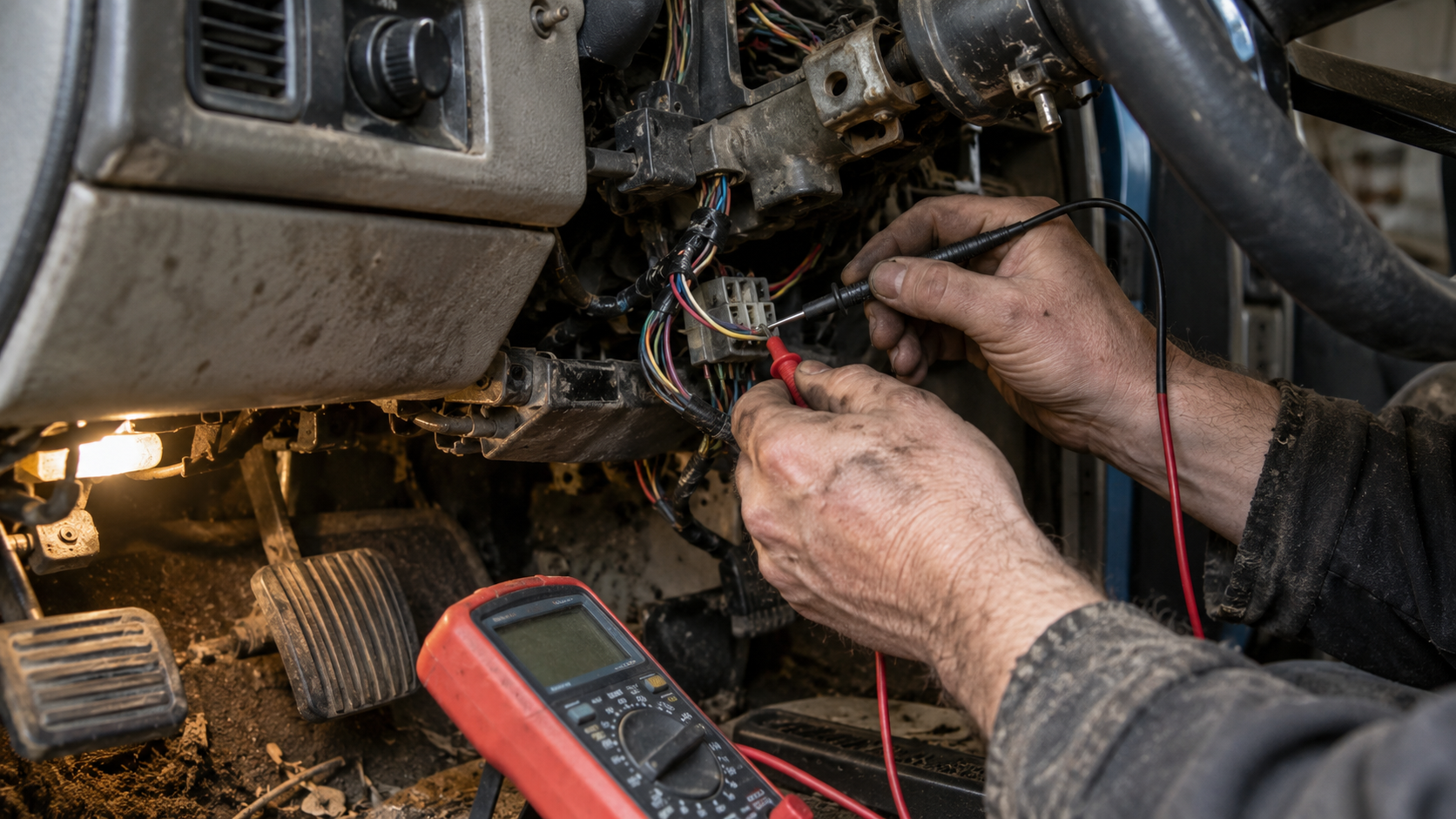
Diagnosis comes first: a digital multimeter is more valuable than guessing from wire colors.
The second image shows what a realistic installation looks like. The footwell is dirty. The trim is worn. The technician is working at an uncomfortable angle with a meter and probes. This is not the clean bench-test environment shown in many product videos; this is where the real work happens.
What should be verified?
- Constant power: confirm the supply remains stable in every ignition position.
- ACC: identify the circuit that powers accessories in the correct operating stage.
- Ignition: verify the circuit remains energized while the engine is being started when required by the vehicle.
- Starter: confirm the actual crank signal rather than assuming it from color alone.
- Brake input: make sure the start authorization input behaves as expected.
- Door lock logic: determine whether the vehicle uses the signal type supported by the system.
- Factory anti-theft: identify any transponder or immobilizer behavior before installation.
A useful companion article is How to Plan a Push Button Start Installation Before You Touch a Single Wire.
A Dirty Interior Does Not Mean the Electrical System Is Bad
It is easy to look at an old, dusty work truck and assume that the vehicle is too worn for a modern upgrade. That is not necessarily true. Cosmetic wear and electrical health are two very different things.
A truck can have greasy fingerprints around the dash, faded plastic, scratched trim, and a filthy floor mat while still having a healthy alternator, strong battery, good grounds, and predictable ignition behavior. Conversely, a clean-looking vehicle may hide intermittent voltage drop, previous wiring damage, or a weak starting circuit.
The Push Button Is the Easy Part — Integration Is the Real Job
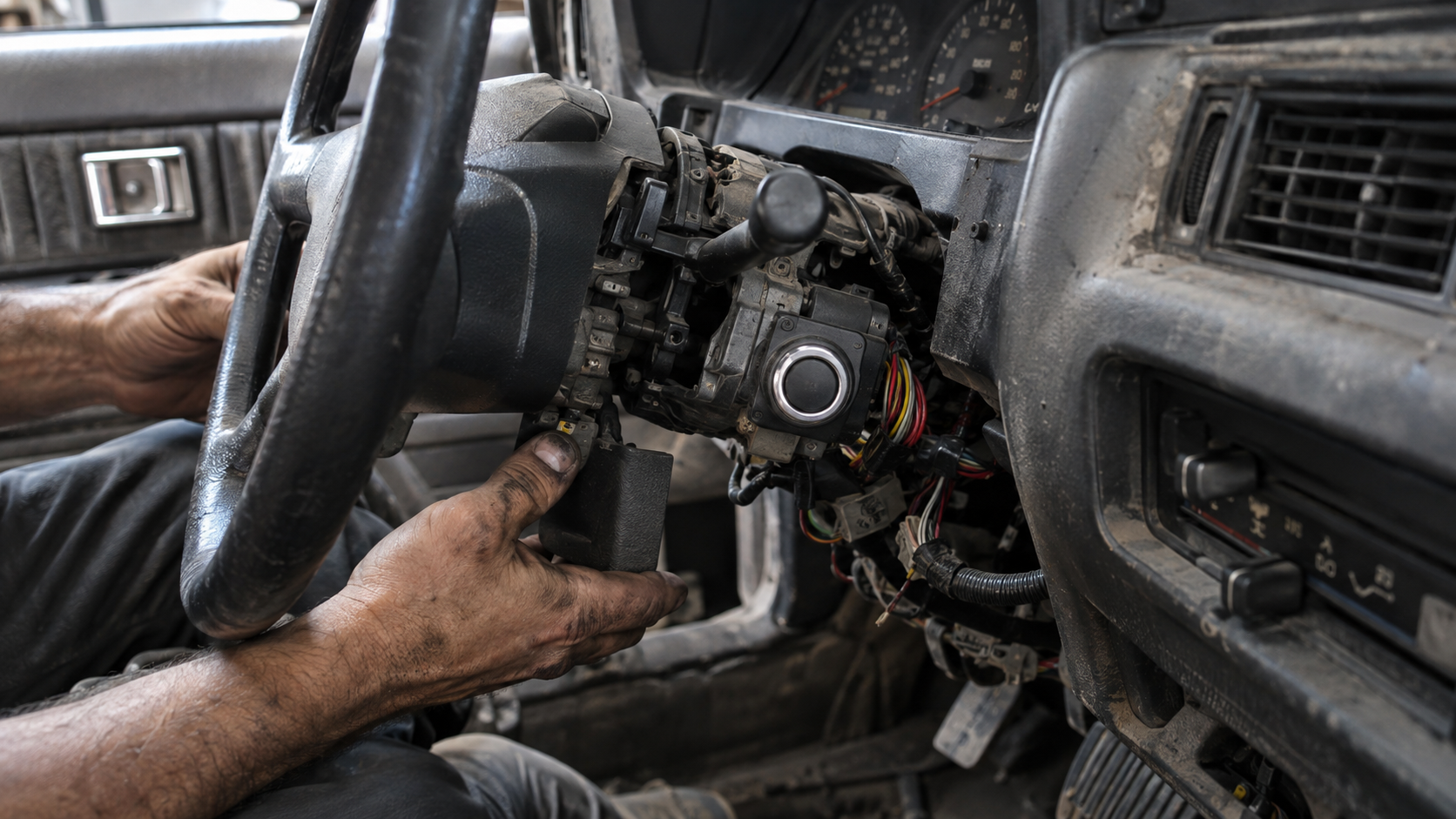
Once the trim comes off, installation quality matters more than appearance.
The third image shows the moment when an upgrade stops being a product and becomes an installation. The steering-column area is open, wiring is exposed, and the condition of the old vehicle becomes obvious. Dirt, dust, aging plastics, and past repairs are normal on a working truck.
This is where careful organization matters. A good installation should not create a new mess behind the dash. The goal is to add modern functionality while leaving the vehicle easier—not harder—to service later.
A clean installation should include:
- Secure, mechanically reliable electrical connections.
- Properly insulated wiring.
- Routing away from sharp edges and moving steering components.
- Stable ground connections on clean metal.
- Strain relief so connectors are not hanging by their wires.
- Testing of each function before reinstalling trim panels.
For a structured sequence, see Push Button Start Installation Order: The 8-Stage Method That Makes Troubleshooting Easier.
What About a Chip Key or Factory Immobilizer?
This is one of the most important questions for older vehicles built from the late 1990s onward. Some trucks and cars use a transponder key or another factory anti-theft system. In those vehicles, successfully powering the ignition and starter circuits does not necessarily mean the engine will run.
A common symptom is simple: the engine cranks normally, but it does not start because the factory security system has not authorized the ignition sequence.
That is why compatibility must be evaluated before the project begins. The goal should be to preserve the vehicle’s security behavior and use an appropriate lawful integration method rather than simply defeating factory protection.
Read Can You Add Push Button Start to a Car With a Chip Key? for a deeper explanation.
PKE and Remote Start Can Change the Experience Even More
Push button start changes what happens after you sit down. Passive keyless entry changes what happens before you open the door. Remote start changes what happens before you even reach the vehicle.
For an older work truck, those conveniences can be surprisingly useful. Imagine walking toward the truck with a toolbox in one hand and supplies in the other. Or starting the truck before leaving the house on a freezing morning. These are ordinary situations, which is exactly why the features become valuable.
But they should be added in the right order. The core ignition sequence should work reliably first. Only after that should additional features be tested and integrated.
Why Work Trucks Are Such Good Candidates for This Kind of Upgrade
Work trucks are often kept longer than ordinary passenger vehicles. Their owners already know their weaknesses, maintenance history, noises, and quirks. The vehicle may be fully paid off and still capable of doing exactly what the owner needs.
That changes the economics. Buying a newer truck simply to gain push button start, keyless entry, or remote start can be difficult to justify if the existing truck is mechanically sound.
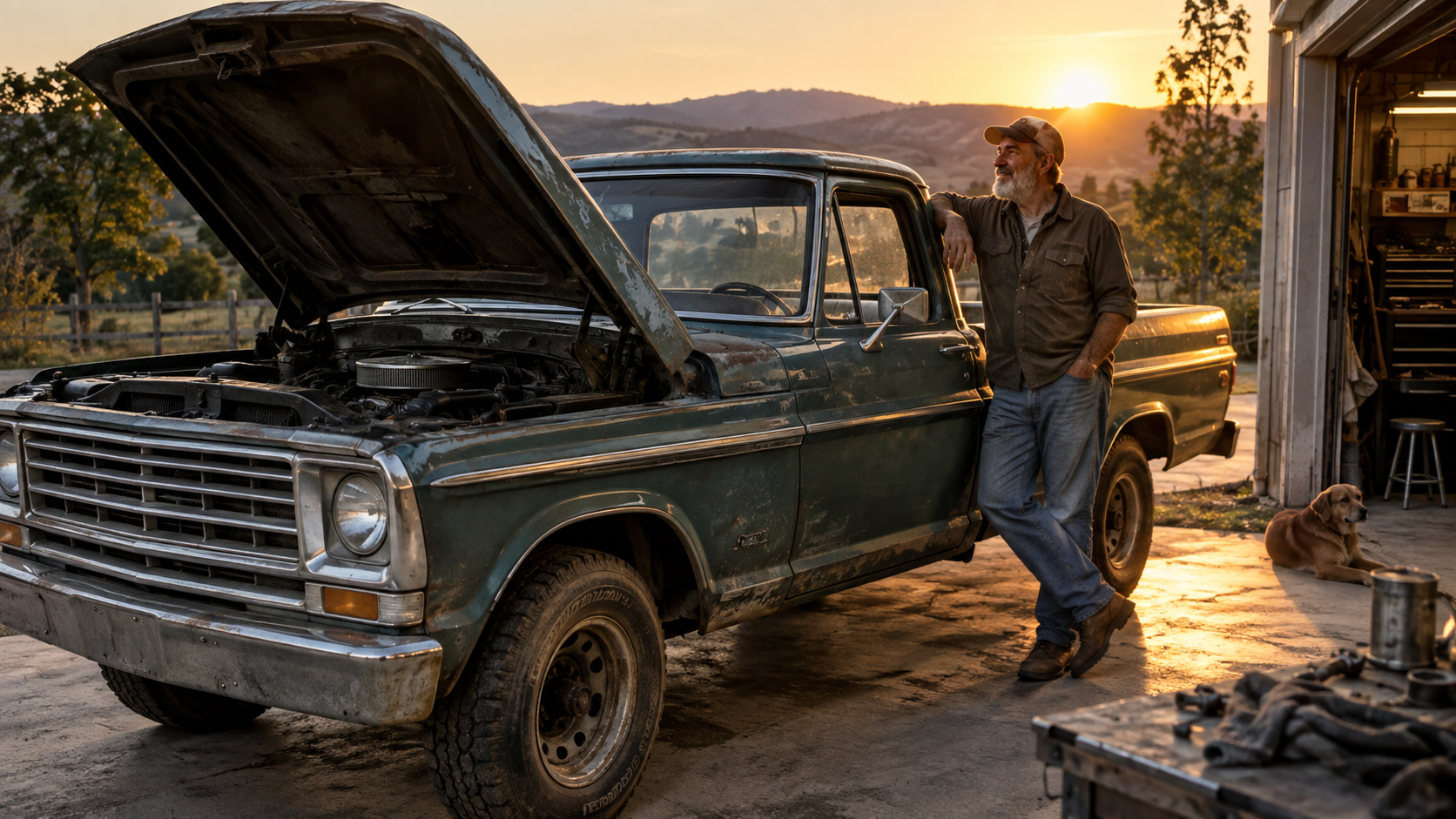
The objective is not to erase the truck's age. It is to make a good truck easier to keep using.
The final image captures the real reason many people keep old trucks. They are familiar. They have history. They have scratches, repaired parts, old grease around the engine bay, and memories attached to them. Their value is not measured only by resale price.
When Is an Old Truck Worth Modernizing?
A push button start conversion makes the most sense when the basic vehicle is still worth keeping. Before spending money or time on convenience upgrades, ask a few practical questions.
- Is the engine dependable?
- Is the transmission healthy?
- Are the brakes, suspension, and tires safe?
- Does the charging system work correctly?
- Do you expect to keep the vehicle for several more years?
- Are the old ignition and entry routines genuinely annoying in daily use?
If the answer to most of these is yes, modernization can make a lot of sense.
What Changes After the Upgrade?
The truck is still old afterward. The steering wheel may still be worn. The dashboard may still have scratches. The door sill may still carry dirt from work boots. None of that disappears.
What changes is the relationship with the vehicle. You approach it differently. You start it differently. If PKE or remote start is included, even the moments before entering the truck change. The vehicle begins to fit a modern routine without losing its old-truck character.
That is what many owners actually mean when they search for how to make an old truck feel new again. They do not necessarily want a new truck. They want the good truck they already own to stop feeling inconvenient.
Final Thoughts
An old work truck covered in dust, grime, and years of use can still be a very good candidate for a thoughtful push button start upgrade. The condition of the upholstery or dashboard is not the deciding factor. Electrical health, installation quality, compatibility, and the owner’s long-term plans matter far more.
If the truck is dependable, the best approach is simple: test first, repair existing faults, understand the ignition logic, integrate the system carefully, and add convenience features only after the basic starting sequence is stable.
Done correctly, the result does not feel like a gadget attached to an old truck. It feels like the same trustworthy vehicle—just easier to live with.
Planning a Push Button Start Upgrade?
Start with compatibility, ignition diagnosis, and a clean installation plan before touching factory wiring.
Browse Push Start Systems →or contact EFHIPS for compatibility guidance
Related Reading
- How to Plan a Push Button Start Installation Before You Touch a Single Wire
- Old Truck, Modern Routine: A Practical Push Start Upgrade Plan for 2000s Pickups
- Why Americans Modify Old Pickup Trucks Instead of Replacing Them
- Can You Add Push Button Start to a Car With a Chip Key?
- Push Button Start Kit Buyer's Guide 2026