The finished button tells only half the story
A clean illuminated button on the dashboard may look impressive, but the long-term reliability of the system is determined behind the trim panels. The control module, ignition connections, grounds, relays and harness routing matter much more than the visible part of the installation.
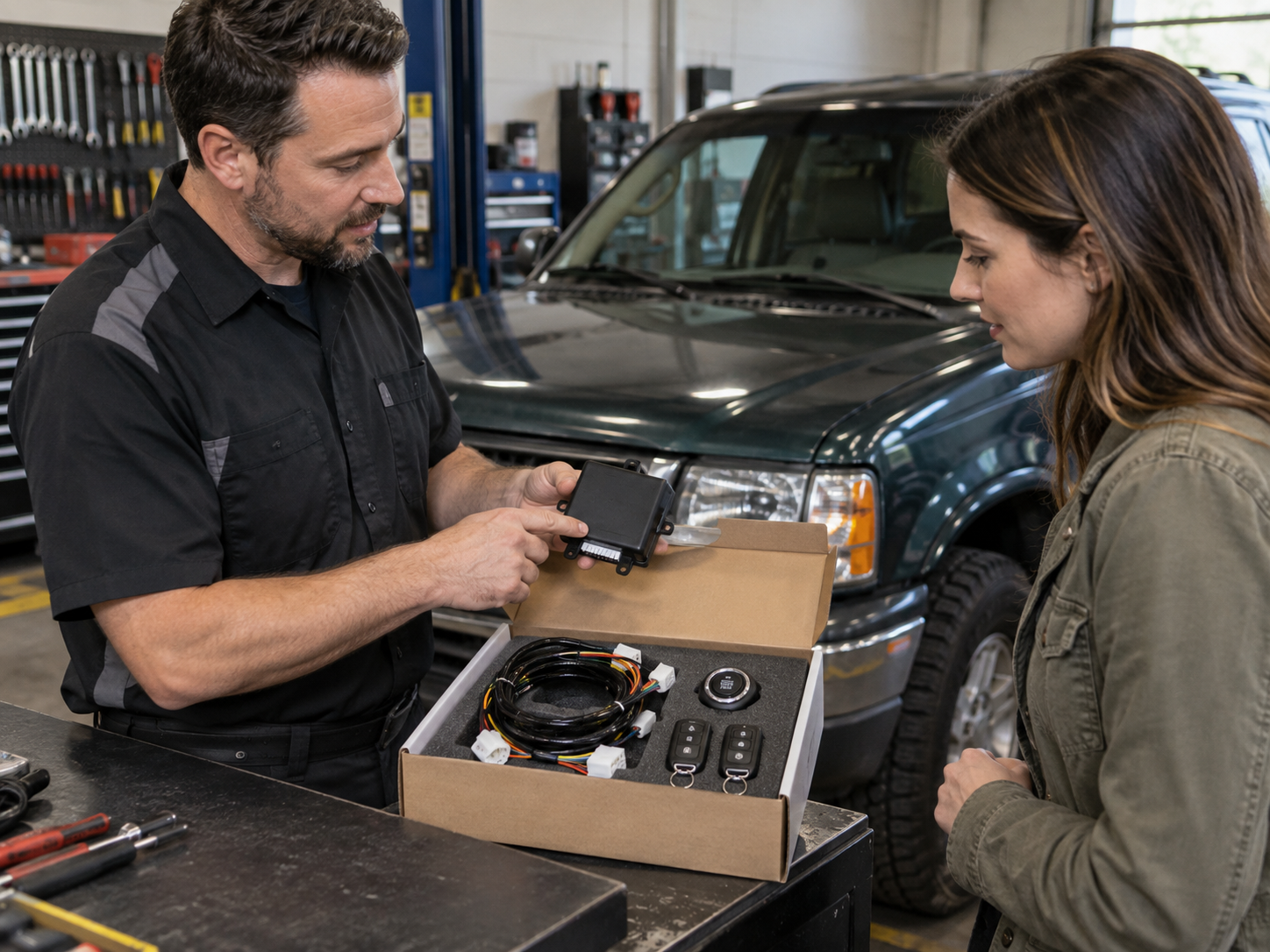
The installer should understand the vehicle before modifying it
A professional process starts with a wiring plan. The installer identifies ignition circuits, confirms brake input polarity, checks the door-lock system and determines whether the vehicle has a transponder immobilizer. This should happen before permanent connections are made.
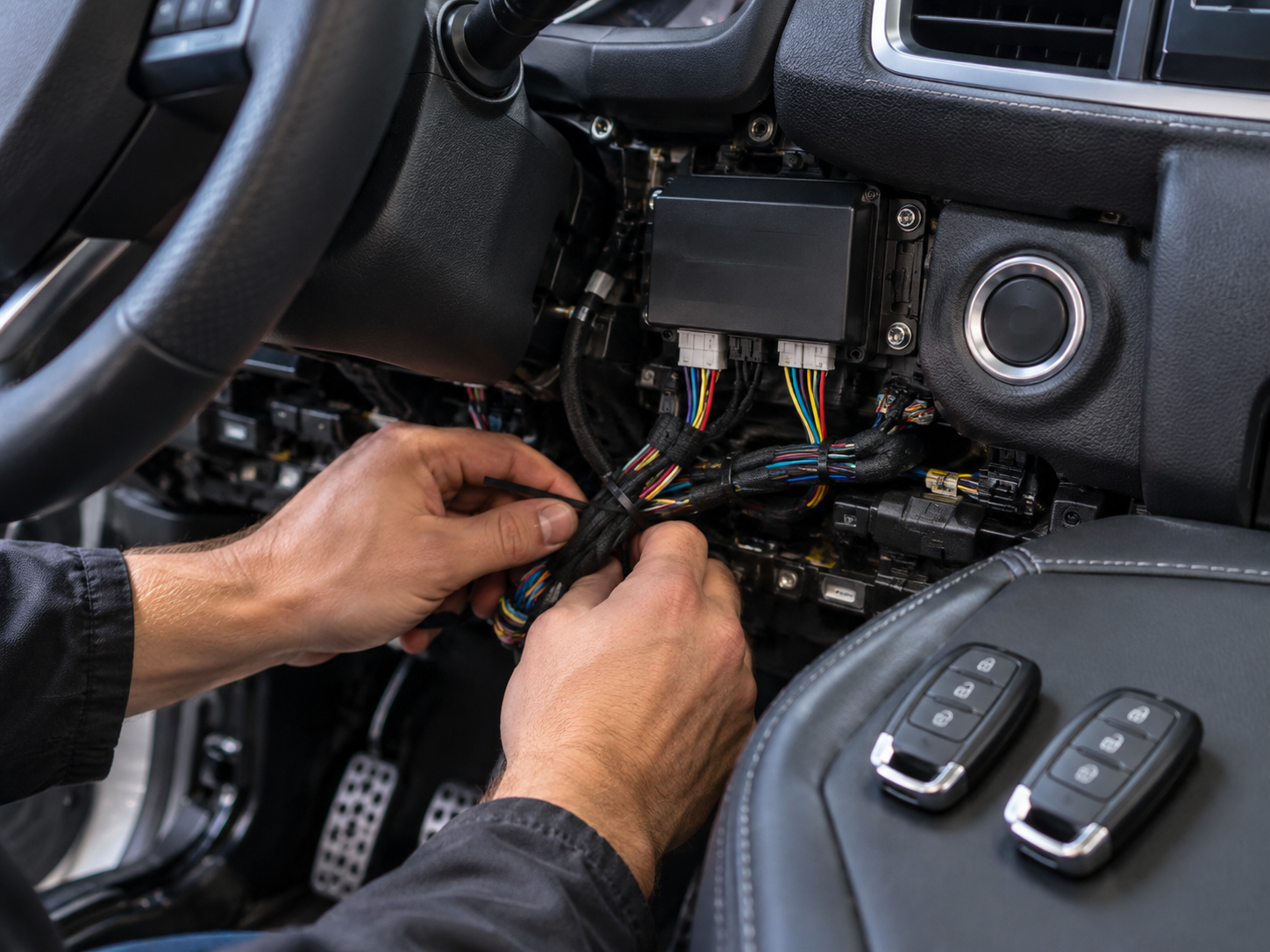
Harness routing should look intentional
Loose wires should not hang near pedals, steering shafts or sharp metal edges. Harnesses should be supported, bundled and routed so that normal vehicle movement does not pull on connectors. Service access also matters: the installation should not make future diagnosis impossible.
Relays should be used where the electrical logic requires them
Some vehicles need polarity conversion, current isolation or an additional control path. A relay can be the correct way to achieve that when it is wired properly. It should not be used as a guess or as a substitute for understanding the circuit.
Test every function before reassembling the dashboard
Before trim goes back on, verify normal start, stop, ACC mode, ignition mode, brake detection, locking, PKE and any remote-start function that is part of the installation. Repeating the tests after reassembly helps confirm that no connector was disturbed while panels were being installed.
Explore the EFHIPS Push Button Start System
Review the product features, compatibility limits and installation information before beginning your project.
View Product Details